

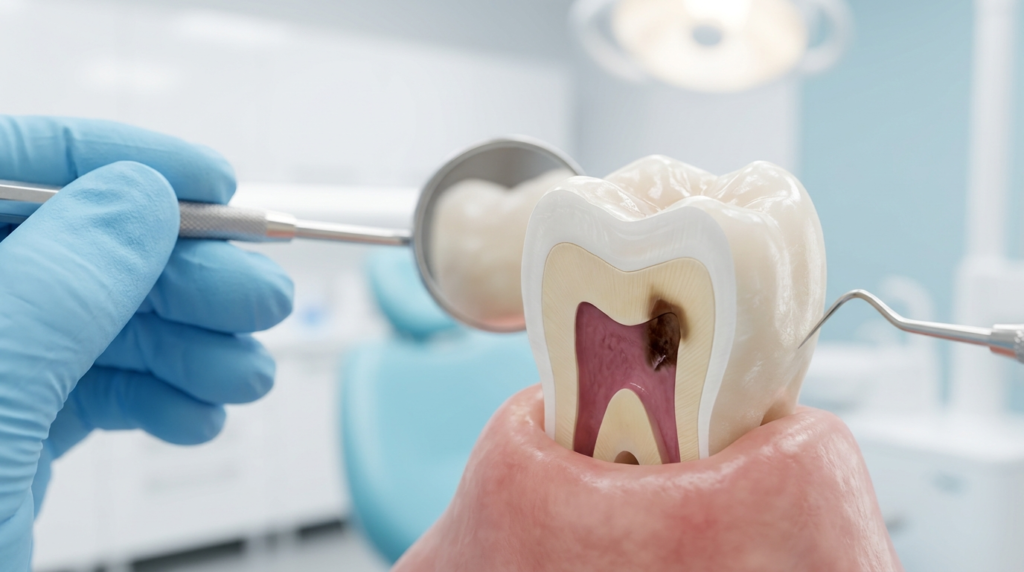
Tooth pain can start as a mild discomfort and gradually become difficult to ignore. Many people hope the pain will disappear on its own, especially when they want to avoid a root canal. However, delaying dental treatment can allow tooth decay or infection to become more serious.
So, when is it too late to avoid a root canal? A root canal may become necessary when the soft tissue inside the tooth, known as the dental pulp, is severely inflamed, infected, or damaged beyond recovery. At this stage, a simple filling may no longer be enough to save the tooth.
Recognising the warning signs early and visiting a dentist can help protect your natural tooth and prevent complications.
When Is It Too Late to Avoid a Root Canal?
It may be too late to avoid a root canal when tooth decay, a crack, or an injury has caused irreversible damage to the dental pulp. The pulp contains nerves and blood vessels that help nourish the developing tooth and respond to external stimuli.
When the pulp becomes severely damaged or infected, a dentist may recommend root canal treatment to remove the affected tissue, clean the inside of the tooth, and seal it. Common signs that a root canal may be necessary include:
- Persistent or severe toothache.
- Pain that continues after consuming hot or cold food and drinks.
- Pain when chewing or biting.
- Swelling or tenderness around the affected tooth.
- A pimple-like bump on the gums near the tooth.
- A tooth that becomes grey or darkens after an injury.
These symptoms do not always mean that you need a root canal. A dental examination and, when appropriate, dental X-rays help determine the actual cause and the most suitable treatment.
6 Warning Signs You Should Not Ignore
1. Tooth Pain That Does Not Go Away
Occasional tooth sensitivity may result from exposed dentine, gum recession, or minor enamel damage. However, persistent, spontaneous, or throbbing tooth pain may indicate deeper inflammation or infection. If the pain continues for hours, returns frequently, or interferes with sleep, arrange a dental examination promptly. Waiting for the pain to disappear may delay the treatment your tooth needs.
2. Lingering Sensitivity to Hot and Cold
Brief sensitivity that stops immediately after removing the trigger may have several causes. However, pain that lingers after drinking something hot or cold can indicate inflammation of the dental pulp. A dentist can assess whether the pulp may recover with appropriate treatment or whether root canal treatment is needed.
3. Pain While Biting or Chewing
Pain when biting down may be caused by deep decay, a cracked tooth, inflammation around the tooth root, or other dental problems. Avoid repeatedly chewing on the painful side to test the tooth. A dentist should examine the affected area to identify the source of the discomfort.
4. Swollen or Tender Gums
Swelling near a painful tooth may indicate an infection or dental abscess. You may also notice tenderness, pus, or an unpleasant taste in your mouth. These symptoms require prompt dental care. Do not squeeze or attempt to drain a swollen area yourself.
5. A Darkened Tooth
A tooth that turns grey or dark after an accident may have sustained damage to its internal tissue. Discolouration alone does not confirm that a root canal is necessary, but it should be evaluated, particularly if it occurs alongside pain or swelling.
6. Tooth Pain Suddenly Stops
The disappearance of tooth pain does not always mean the problem has healed. In some cases, the pulp may have lost its vitality, reducing the sensation of pain even though infection or damage remains.
If a previously painful tooth suddenly stops hurting, especially when other warning signs are present, do not assume that treatment is no longer needed.
Can You Avoid a Root Canal if You Act Early?
In some cases, yes. Early treatment can help prevent decay or damage from reaching the dental pulp. Depending on the condition of your tooth, treatment may include:
- Dental fillings: Used when decay can be removed without causing irreversible pulp damage.
- Protective pulp treatments: Certain cases may be managed with vital pulp therapy, depending on the extent of inflammation and the clinical findings.
- Dental crowns: Used to protect a weakened or damaged tooth when appropriate.
- Root canal treatment: Recommended when the pulp is irreversibly inflamed or infected, and the tooth can be restored.
The best treatment depends on the depth of decay, the condition of the pulp, the presence of infection, and the amount of healthy tooth structure remaining. Good oral hygiene, regular dental check-ups, and early treatment of cavities can reduce the risk of advanced tooth damage.
What Happens If You Delay a Necessary Root Canal?
Delaying treatment when the dental pulp is severely damaged may lead to increasing pain, infection around the root, swelling, and an abscess. In some cases, the tooth may become more difficult to restore.
If the tooth cannot be saved, extraction may be necessary. Losing a natural tooth can also create a need to discuss replacement options.
If you experience facial swelling, fever, or rapidly worsening symptoms, seek urgent dental care. Difficulty breathing or swallowing, or swelling that spreads towards the neck or eye, requires emergency medical attention.
Is Root Canal Treatment Painful?
Modern root canal treatment is performed using local anaesthesia to minimise pain during the procedure. You may experience tenderness or mild discomfort for a few days afterwards, depending on the condition of the tooth and surrounding tissues.
The purpose of treatment is to remove damaged or infected pulp, clean and seal the root canals, and help preserve the natural tooth. A filling or crown may be required afterwards to restore strength and function.
If you are concerned about treatment, discuss your symptoms and questions with your dentist before the procedure. For patients looking for ROOT CANAL TREATMENT AHMEDABAD, a dental consultation can help determine whether root canal treatment is necessary or whether another option may be suitable.
How Can You Reduce Your Risk of Needing a Root Canal?
Although not every root canal can be prevented, the following habits can help protect your teeth:
- Brush twice daily with fluoride toothpaste.
- Clean between your teeth every day.
- Limit frequent sugary snacks and drinks.
- Visit your dentist regularly for check-ups.
- Treat cavities and dental injuries promptly.
- Avoid using your teeth to open packages or bite hard objects.
Do not rely only on pain as a sign of dental health. Some cavities and early dental problems may not cause noticeable symptoms.
Frequently Asked Questions
When is it too late to avoid a root canal?
A root canal may become necessary when the dental pulp is irreversibly inflamed, infected, or damaged. A dentist must examine the tooth to confirm the diagnosis and determine whether it can be saved.
Can an infected tooth heal without a root canal?
An infected or irreversibly damaged dental pulp generally will not recover on its own. Depending on the diagnosis, treatment may involve root canal treatment or extraction. Certain cases may qualify for other pulp-preserving treatments.
Does severe tooth pain always mean I need a root canal?
No. Severe tooth pain can have several causes, including deep decay, a cracked tooth, gum problems, or other dental conditions. An examination is needed to identify the cause.
How can I prevent a root canal?
Regular dental check-ups, good oral hygiene, fluoride toothpaste, and prompt treatment of cavities can reduce the risk of advanced decay. However, some injuries and dental conditions cannot be prevented entirely.
Conclusion
Knowing when it is too late to avoid a root canal can help protect your natural teeth. Persistent toothache, sensitivity, or swollen gums may indicate a problem that needs prompt dental care. Early diagnosis can help prevent complications and improve the chances of saving your tooth.
At Agrawal’s Multispeciality Dental Clinic, Ahmedabad, we provide personalised dental care to help you understand your treatment options. Don’t wait for the pain to worsen; book your dental appointment today to find out whether you need a root canal and protect your smile.