

One of the most common questions patients ask before replacing a missing tooth is, “Is a teeth implant painful?” The thought of dental surgery can feel worrying, especially if you have never had an implant procedure before.
The good news is that dental implant placement is usually performed under local anaesthesia, which helps prevent pain during surgery. You may experience some soreness, swelling or tenderness after the anaesthesia wears off, but these symptoms generally improve as healing progresses.
In this guide, we explain what dental implant surgery feels like, how much discomfort you may experience afterwards, how long recovery takes and what you can do to manage pain.
Is a Teeth Implant Painful During Surgery?
Dental implant surgery is generally not painful during the procedure because the dentist numbs the treatment area with local anaesthesia. You may feel pressure, movement or vibration, but you should not feel sharp pain.
If you experience pain during treatment, inform your dentist so they can assess whether additional anaesthesia is needed.
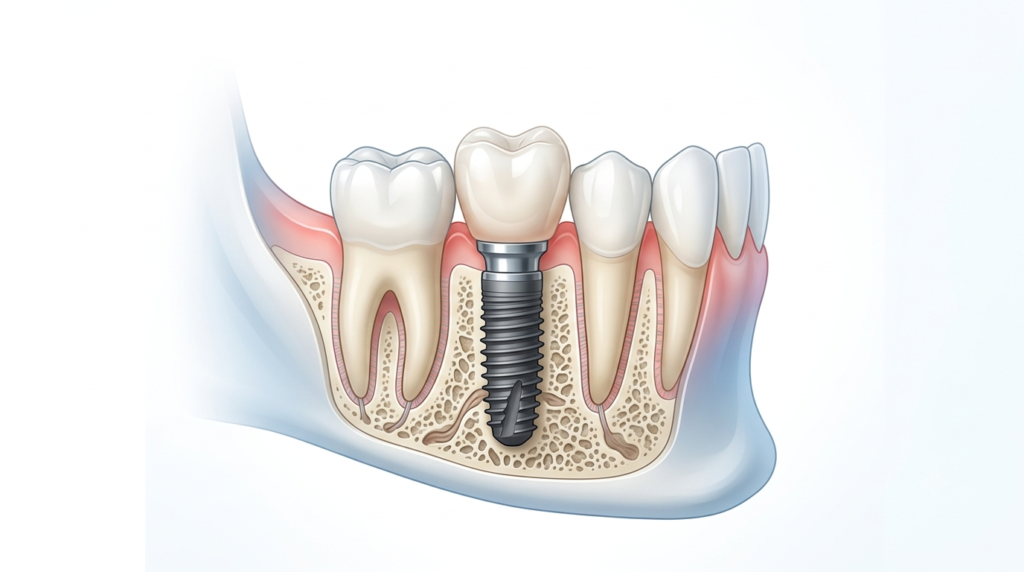
The procedure involves placing a small titanium implant into the jawbone to support a replacement tooth. Your dentist will first assess your oral health, bone condition and treatment requirements to plan the procedure safely.
How Much Pain Can You Expect After Dental Implant Surgery?
Some discomfort is normal after dental implant surgery. However, the amount of pain varies depending on the complexity of the procedure, the number of implants placed and your individual healing response.
Common temporary symptoms include:
- Mild to moderate soreness around the implant site
- Swelling in the gums or cheek
- Minor bruising or tenderness
- Slight bleeding during the early recovery period
- Discomfort while chewing near the treated area
These symptoms are often most noticeable during the first two or three days and gradually improve over the following days. More complex procedures, such as bone grafting, may require additional recovery time.
How Long Does Dental Implant Pain Last?
For many patients, discomfort begins to improve within a few days after implant placement. Mild tenderness may continue for a week or sometimes longer, depending on the procedure.
| Recovery stage | What you may experience |
|---|---|
| First 24 hours | Numbness initially, followed by soreness and possible swelling |
| Days 2–3 | Swelling or tenderness may be more noticeable |
| Days 4–7 | Symptoms should generally begin to improve |
| Following weeks | The gums continue healing while the implant integrates with the jawbone |
Remember that healing varies from person to person. The implant may take several months to integrate fully with the jawbone, even after the initial discomfort has settled.
Contact your dentist if pain becomes worse rather than better, or if you develop increasing swelling, fever, pus or persistent bleeding.
What Factors Can Affect Dental Implant Pain?
Not every dental implant procedure is the same. Several factors can influence how much discomfort you experience.
1. Number of Implants
Replacing one missing tooth may involve a simpler procedure than placing several implants. More extensive treatment can involve a longer recovery.
2. Bone Grafting Requirements
If there is insufficient jawbone to support an implant, your dentist may recommend bone grafting. This can increase the complexity of treatment and affect recovery time.
3. Gum and Oral Health
Existing gum disease or other oral health problems may need to be treated before implant placement. Healthy gums and appropriate treatment planning support better healing.
4. Individual Pain Sensitivity
Everyone responds differently to dental procedures. Your medical history, pain sensitivity and healing response can influence your recovery experience.
How Can You Reduce Pain After Dental Implant Surgery?
Following your dentist’s aftercare instructions can help reduce discomfort and support healing.
- Use prescribed medication: Take pain relief as directed by your dentist.
- Apply a cold compress: Follow your dentist’s advice about applying a cold pack externally during the initial recovery period.
- Choose soft foods: Consider foods such as yoghurt, mashed vegetables and lukewarm soup while chewing is uncomfortable.
- Maintain gentle oral hygiene: Clean your teeth carefully and follow the specific instructions provided for the surgical area.
- Avoid smoking: Smoking can interfere with healing and increase the risk of implant complications.
- Attend follow-up appointments: Your dentist can monitor healing and identify potential problems early.
Avoid strenuous activity during the initial recovery period if your dentist advises you to rest. Do not take antibiotics or pain medication without appropriate professional guidance.
Is Dental Implant Pain Worse Than Tooth Extraction?
Dental implant placement and tooth extraction can both cause temporary discomfort, but the experience varies according to the procedure.
A straightforward implant placement may involve manageable soreness, while a difficult extraction or a complex implant procedure may produce more discomfort. There is no single pain level that applies to every patient.
Your dentist can explain what to expect based on your oral health, the condition of the jawbone and whether additional procedures are required.
When Should You Contact Your Dentist?
Some soreness after implant placement is expected, but severe or worsening symptoms should not be ignored.
Contact your dentist if you experience:
- Pain that increases after initially improving
- Swelling that becomes progressively worse
- Fever or pus around the surgical site
- Persistent bleeding
- An implant or temporary restoration that feels loose
Early assessment can help identify infection, healing problems or other complications.
Frequently Asked Questions
1. Is a teeth implant painful?
Dental implant surgery is usually performed under local anaesthesia, which helps prevent pain during placement. Temporary soreness and swelling may occur afterwards.
2. How many days does dental implant pain last?
Many patients notice improvement within a few days. Mild tenderness can last a week or longer, depending on the complexity of treatment and individual healing.
3. Can I go to work the day after dental implant surgery?
Some patients can return to normal activities the following day, particularly after a straightforward procedure. Others may need additional rest. Follow your dentist’s advice.
4. Is dental implant surgery done under anaesthesia?
Dental implants are commonly placed using local anaesthesia. Sedation may be available in selected cases, depending on the patient’s needs and the clinic’s facilities.
5. Are dental implants worth considering despite the pain?
For suitable patients, dental implants can provide a fixed replacement for missing teeth and help restore chewing function. The benefits, risks, treatment time and costs should be discussed with a dentist.
Conclusion
So, is a teeth implant painful? For most patients, the procedure itself is manageable because local anaesthesia helps control pain during surgery. Some soreness and swelling afterwards are normal, but they generally improve as healing progresses.
Understanding the procedure and following your dentist’s aftercare advice can make recovery more comfortable. If you are considering dental implants, a professional consultation can help you understand your treatment options and what to expect.
Considering dental implants in Ahmedabad? Contact Agrawal’s Multispeciality Dental Clinic to discuss your missing-tooth concerns and find out whether dental implant treatment may be suitable for you.