

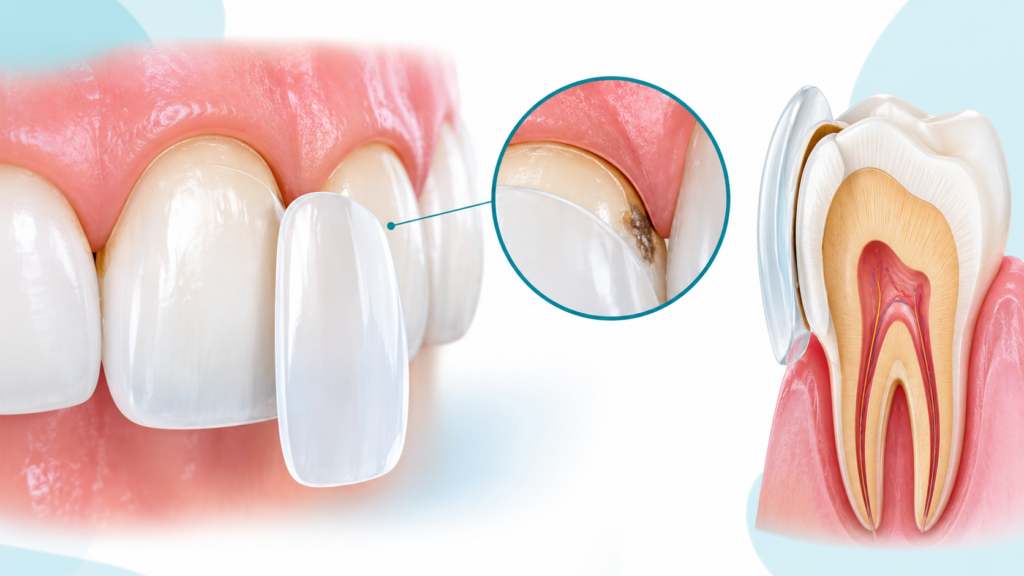
Dental veneers can improve your smile by covering stains, chips, gaps, and minor shape irregularities. However, many people considering veneers have one important question: Do teeth go bad under veneers?
The answer is yes: natural teeth can still develop cavities or decay under or around dental veneers. Veneers cover the front surface of teeth, but they do not make the entire tooth immune to decay. Good oral hygiene, proper veneer placement, and regular dental check-ups help protect your natural teeth.
Understanding how tooth decay develops under veneers can help you maintain a healthy smile for years.
Do Teeth Go Bad Under Veneers?
Yes, teeth can develop decay under veneers, although it does not happen to everyone. Dental veneers are thin shells made from porcelain or composite resin that are bonded to the front surface of teeth. They improve appearance but do not replace the need for daily dental care.
When plaque and bacteria accumulate around the edges of a veneer, acids can damage the exposed natural tooth structure. If the veneer becomes loose, damaged, or poorly fitted, it may also become more difficult to keep the area clean.
Dental veneers need regular care to keep both the veneers and the natural teeth underneath them healthy. Brush twice daily with a soft-bristled toothbrush and non-abrasive fluoride toothpaste, floss every day to remove plaque around the veneer edges, and visit your dentist regularly for check-ups and professional cleaning. These habits help reduce the risk of tooth decay, gum problems, and veneer damage.
Can Teeth Rot Under Veneers?
Yes, teeth can rot under veneers if tooth decay develops in the natural tooth structure beneath or around the restoration. However, veneers themselves do not automatically cause tooth decay.
Several factors can increase the risk:
- Poor oral hygiene: Plaque can collect around the veneer margins and between teeth.
- Untreated cavities: Placing veneers over existing decay can allow dental problems to worsen.
- Poor veneer fit: Gaps or irregular margins may make plaque removal more difficult.
- Gum recession: When gums move away from the teeth, exposed root surfaces can become vulnerable to decay.
- Frequent sugar consumption: Bacteria use sugars to produce acids that damage tooth enamel.
- Damaged or loose veneers: A chipped or detached veneer may require prompt professional assessment.
A dentist should examine the tooth and veneer to determine whether decay is present and recommend the appropriate treatment.
What Are the Signs of Tooth Decay Under Veneers?
Tooth decay may develop without obvious symptoms in its early stages. Because a veneer covers part of the natural tooth, you may not be able to see what is happening underneath it.
1. Tooth Sensitivity
New or increasing tooth sensitivity to hot, cold, or sweet foods may indicate a dental problem. However, sensitivity can also have other causes, so it does not automatically mean you have a cavity.
2. Toothache or Persistent Discomfort
Pain around a veneered tooth should not be ignored. It may be associated with decay, gum problems, a damaged veneer, or another dental condition.
3. Gum Redness or Swelling
Inflamed gums around a veneered tooth may indicate plaque accumulation or gum disease. Persistent swelling requires a dental examination.
4. Bad Breath or an Unpleasant Taste
Ongoing bad breath or an unusual taste can be associated with plaque buildup, gum disease, or infection. A dentist can identify the underlying cause.
5. A Loose, Chipped, or Damaged Veneer
If a veneer feels loose, chips, or comes away from the tooth, contact your dentist. Avoid trying to glue it back yourself.
Important: These symptoms do not confirm tooth decay. A dental examination, and sometimes dental X-rays, may be needed to identify the cause.
How Can You Prevent Tooth Decay Under Veneers?
Proper veneer care helps protect both your restoration and the natural tooth underneath it. Follow these practical steps.
Brush Twice a Day
Use a soft-bristled toothbrush and fluoride toothpaste. Brush gently along the gumline and around the edges of your veneers to remove plaque without damaging your gums.
Clean Between Your Teeth Daily
Use dental floss or another interdental cleaning aid recommended by your dentist. Cleaning between teeth helps remove plaque and food particles from areas that a toothbrush may miss.
Limit Sugary Snacks and Drinks
Frequent exposure to sugar increases the risk of tooth decay. Choose balanced meals, limit sugary snacks between meals, and drink water regularly.
Attend Regular Dental Check-Ups
Routine dental visits allow your dentist to examine your veneers, check your gums, assess the edges of the restorations, and identify possible problems early. Your dentist can recommend a suitable check-up schedule based on your oral health.
Avoid Biting Hard Objects
Do not use your veneered teeth to open packages, bite fingernails, or chew hard objects such as ice. These habits may chip or loosen veneers.
Treat Dental Problems Before Getting Veneers
Existing cavities and gum disease should be treated before cosmetic veneer placement. A dentist should assess your teeth, gums, bite, and overall oral health before recommending treatment.
What Happens If You Have Tooth Decay Under Veneers?
Treatment depends on the location and extent of the decay, as well as the condition of the veneer and natural tooth.
- Early or limited decay: Your dentist will assess the affected area and determine the appropriate treatment.
- Decay near the veneer margins: The restoration may need repair or replacement to allow proper treatment and sealing.
- Deeper tooth decay: A filling or root canal treatment may be necessary, depending on how far the decay has progressed.
- Severe damage: If the tooth structure is significantly weakened, your dentist may discuss alternative restorative options.
Not every case requires veneer removal, and not every damaged tooth needs a root canal. The treatment plan depends on a professional examination.
How Long Do Teeth Stay Healthy Under Veneers?
There is no fixed time for how long a natural tooth will remain healthy under a veneer. Its condition depends on the original health of the tooth, the quality and fit of the restoration, oral hygiene, diet, gum health, and regular dental care.
Porcelain veneers can last many years with appropriate care, but their longevity does not guarantee that the underlying teeth will never develop cavities.
Remember that veneers are a cosmetic restoration, not a substitute for preventive dentistry. Protecting the natural tooth remains essential even when your smile looks healthy from the outside.
Frequently Asked Questions
1. Do teeth go bad under veneers?
Yes, natural teeth can develop cavities under or around veneers. Proper oral hygiene, well-fitted restorations, and regular dental examinations help reduce the risk.
2. Can teeth rot under veneers without pain?
Yes. Early tooth decay may not cause noticeable pain or sensitivity. Routine dental examinations can help identify problems before symptoms become severe.
3. Can you get cavities under porcelain veneers?
Yes. Porcelain resists staining, but it does not prevent cavities in the underlying natural tooth or around the veneer margins.
4. How do dentists check for tooth decay under veneers?
Dentists examine the tooth, gums, and veneer margins. Depending on the findings, they may recommend dental X-rays or other diagnostic tests.
5. Can a tooth be saved if it develops decay under a veneer?
In many cases, the tooth can be treated. The appropriate option depends on the amount of remaining healthy tooth structure and the extent of decay.
6. How should I care for my teeth under veneers?
Brush twice daily with fluoride toothpaste, clean between your teeth every day, limit sugary snacks, avoid biting hard objects, and attend regular dental check-ups.
Conclusion
So, do teeth go bad under veneers? Yes, tooth decay can still develop beneath or around veneers, but that doesn’t mean veneers automatically damage natural teeth. Proper treatment planning, good oral hygiene, and regular professional care are essential for maintaining a healthy smile.
If you are considering veneers or have concerns about an existing restoration, consult a qualified dentist for an individual assessment. The right advice can help you protect your natural teeth while enjoying the cosmetic benefits of veneers.
At Agrawal’s Multispeciality Dental Clinic in Ahmedabad, patients can discuss their dental concerns and explore treatment options that match their oral health needs.