


A sudden, sharp pain while eating ice cream, drinking a cold beverage or enjoying something sweet can be uncomfortable. For some people, the pain disappears within seconds. For others, it may continue or become more frequent.
Tooth sensitivity to cold & sweet foods is common, but it should not always be ignored. Sensitivity can happen when the protective enamel thins or the softer dentin underneath becomes exposed. Gum recession, cavities, enamel erosion, cracked teeth and other dental problems can also contribute to sensitivity.
The good news is that sensitive teeth can often be managed effectively once you identify the underlying cause. Understanding the warning signs can help patients seek dental care at the right time instead of simply avoiding their favourite foods.
What Is Tooth Sensitivity?
Tooth sensitivity, also called dentin hypersensitivity, is a short, sharp sensation that occurs when teeth react to triggers such as cold, sweet, hot, acidic or sometimes even air.
The outer enamel normally protects the inner parts of a tooth. When enamel wears down, or the gum moves away from the tooth, dentin can become exposed. Dentin contains tiny channels that can transmit sensations toward the tooth’s nerve, causing discomfort.
Why Do Cold and Sweet Foods Trigger Pain?
Cold and sweet foods can stimulate exposed dentin. The result may be a quick, sharp pain that stops after the trigger is removed.
However, the cause can differ from person to person. Sensitivity may result from enamel wear, gum recession, tooth decay or other dental conditions. That is why repeated sensitivity deserves attention rather than being treated only as a normal reaction.
Common Causes of Tooth Sensitivity to Cold & Sweet
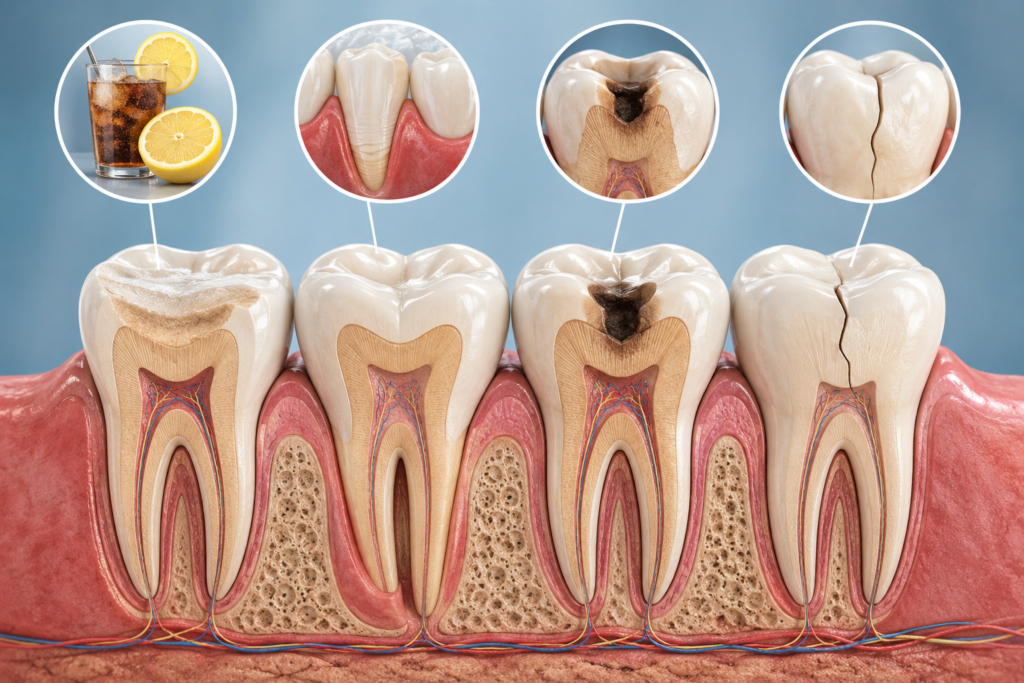
1. Enamel Wear
Enamel is the hard outer layer that protects the tooth. Frequent exposure to acidic foods and drinks, aggressive brushing or other forms of enamel wear can reduce this protection. Once enamel becomes thinner, cold and sweet foods may reach the dentin more easily.
2. Gum Recession
When gums recede, part of the tooth root can become exposed. Unlike the crown of the tooth, the root does not have the same thick enamel covering. This can make exposed areas more sensitive to cold drinks, sweets and brushing.
3. Tooth Decay
A Tooth Decay cavity can cause sensitivity when it reaches deeper areas of the tooth. Cold or sweet foods may trigger discomfort, especially if the decay has progressed. Early dental examination can help identify decay before it becomes more complicated.
4. Cracked or Damaged Teeth
A small crack may sometimes cause sensitivity when eating or drinking. Cracked teeth can also produce pain while biting or chewing. Sensitivity combined with chewing pain should be checked by a dentist rather than managed only with home remedies.
5. Recent Dental Treatment
Temporary sensitivity can occur after certain dental procedures. For example, some patients may experience short-term sensitivity after professional cleaning when previously covered tooth surfaces become exposed.
Warning Signs That Should Not Be Ignored
Occasional sensitivity may not indicate a serious problem, but certain symptoms deserve professional attention.
Look out for:
- Sensitivity that is becoming more frequent
- Pain that lasts after the cold or sweet food is removed
- Severe or spontaneous tooth pain
- Pain while biting or chewing
- Visible holes or dark spots on a tooth
- Swollen or bleeding gums
- Tooth discoloration
- A cracked or broken tooth
- Sensitivity affecting one specific tooth repeatedly
Persistent sensitivity can sometimes be associated with deeper decay or damage affecting the tooth’s inner tissues.
How Is Tooth Sensitivity Diagnosed?
A dentist will usually begin by asking about the type of pain, when it occurs and how long it lasts.
- Tooth enamel
- Gum condition
- Visible cavities
- Cracks or damaged areas
- Exposed tooth roots
- Existing dental restorations
- The response of individual teeth to temperature
Depending on the symptoms, dental X-rays or other diagnostic methods may be recommended.
The important point is that treatment should address the cause, not only the sensitivity.
Treatment Options for Sensitive Teeth
The right treatment depends on what is causing the sensitivity.
Sensitivity Caused by Enamel Wear or Exposed Dentin
A dentist may recommend desensitising products, fluoride-based treatments or changes to daily oral-care habits.
Sensitivity Caused by Gum Problems
If gum recession or gum disease is contributing to sensitivity, treatment may focus on improving gum health and removing plaque or tartar.
Sensitivity Caused by Tooth Decay
A cavity may require a dental filling. If decay has progressed and affected the dental pulp, root canal treatment may be considered.
Sensitivity Caused by a Cracked Tooth
Treatment depends on the location and extent of the crack. Some damaged teeth can be restored, while more severe cases may require a different treatment approach. Early assessment gives the dentist a better opportunity to protect the natural tooth.
Simple Ways to Reduce Tooth Sensitivity
Daily habits can make a significant difference.
Choose a Soft-Bristled Toothbrush
Avoid aggressive brushing. A soft-bristled toothbrush and gentle technique can help protect enamel and gums.
Use Sensitivity Toothpaste
Some desensitising toothpastes contain ingredients such as potassium nitrate that can help reduce sensitivity over time.
Reduce Frequent Acidic and Sugary Foods
Frequent exposure to acidic drinks and sugary foods can contribute to enamel erosion and tooth decay. Limiting these foods can support better oral health.
Maintain Regular Dental Check-Ups
Regular dental examinations can help identify cavities, gum problems and enamel damage before they become more complicated.
For patients in Ahmedabad, timely dental evaluation can be particularly helpful when sensitivity starts interfering with eating, drinking or daily brushing.
When Should You Visit a Dentist in Ahmedabad?
Consider booking a dental consultation if sensitivity:
- Continues for several days
- Is getting worse
- Affects only one tooth
- Causes pain while chewing
- Occurs without an obvious trigger
- Is accompanied by swelling or gum problems
- Makes it difficult to eat normally
Avoiding cold or sweet foods may temporarily prevent discomfort, but it does not identify or treat the underlying cause. A dentist in Ahmedabad can examine the affected tooth and recommend treatment based on the actual condition rather than relying on guesswork.
Conclusion
Tooth Sensitivity to Cold & Sweet foods can be more than a minor inconvenience. It may be linked to enamel wear, gum recession, tooth decay, exposed roots, cracks or other dental concerns.
The most effective approach is to identify the cause early and choose treatment accordingly. Simple habits such as gentle brushing, regular cleaning, limiting frequent acidic and sugary foods, and maintaining dental check-ups can help protect teeth.
If sensitivity is becoming frequent, lasting longer or affecting everyday eating and drinking, consider a dental evaluation in Ahmedabad. Early attention can help protect the natural tooth and prevent a small dental concern from becoming a bigger problem.