

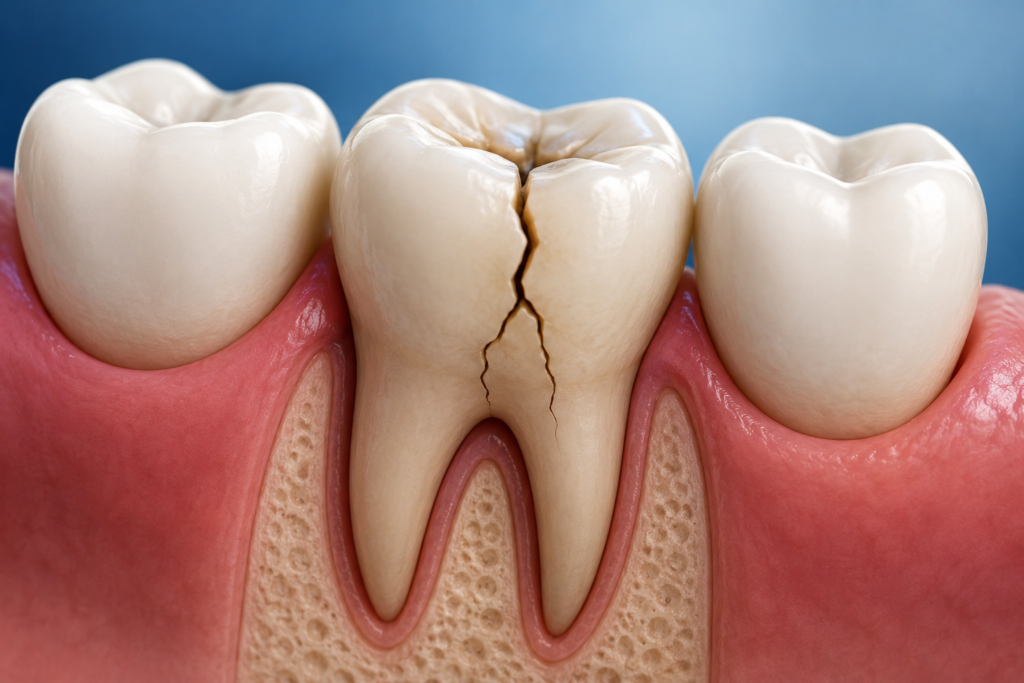
A cracked tooth can be worrying, especially when you experience pain while chewing, sensitivity to hot or cold foods, or discomfort that seems to come and go. One of the most common questions patients ask is: does a cracked tooth need to be pulled?
The answer is not always. A cracked tooth does not automatically mean that extraction is necessary. Treatment depends on the type, location, depth and extent of the crack, as well as whether the tooth can still be restored. In many cases, dentists can protect and preserve a cracked tooth with treatments such as a dental crown or root canal treatment.
At Agrawal Dental Clinic, understanding the condition early can help patients explore tooth-saving treatment options before the crack becomes more serious.
Does a Cracked Tooth Need to Be Pulled?
No, a cracked tooth does not always need to be pulled. A dentist first needs to determine how far the crack has progressed. Small cracks affecting only the enamel may require little or no treatment, while a deeper crack may require a crown or root canal treatment.
If the crack has extended below the gum line or the tooth has completely split into separate segments, saving the entire tooth may not be possible, and extraction may be recommended. This is why it is important not to assume that extraction is the only solution. A professional dental examination is necessary to determine whether the tooth is still restorable.
What Causes a Tooth to Crack?
Teeth can crack for several reasons. Common causes include:
- Biting hard foods or objects
- Dental trauma or accidents
- Teeth grinding or clenching
- Large fillings that weaken the remaining tooth structure
- Natural wear and tear over time
- Sudden changes in temperature from very hot and cold foods
Some cracks are easy to see, while others can be difficult to detect. A cracked tooth may cause sharp pain when biting or releasing a bite, sensitivity to hot or cold foods, or intermittent discomfort.
Types of Cracked Teeth and Their Treatment
Not every crack has the same prognosis. The treatment depends largely on where the crack is located and how deeply it extends.
Craze Lines
Craze lines are very small cracks limited to the outer enamel. They are common in adult teeth and generally do not cause pain.
In most cases, they do not require extensive treatment. Your dentist may simply monitor them and recommend good oral hygiene and regular dental check-ups.
Fractured Cusp
A fractured cusp occurs when part of the chewing surface breaks, often around a large filling. These fractures may not significantly affect the pulp inside the tooth.
Depending on the damage, a dentist may repair the tooth with a filling or protect it with a dental crown.
Cracked Tooth
A true cracked tooth usually involves a crack extending from the chewing surface toward the root. The tooth may still remain in one piece, but the crack can gradually progress.
If the pulp becomes inflamed or infected, root canal treatment followed by a crown may help save the tooth. Early diagnosis is particularly important because untreated cracks can become more extensive.
Split Tooth
A split tooth occurs when a crack progresses far enough that the tooth separates into distinct segments. A completely split tooth generally cannot be saved as one intact tooth.
In selected cases, a dentist or endodontist may be able to preserve part of the tooth, but extraction may be necessary when the tooth cannot be predictably restored.
Vertical Root Fracture
A vertical root fracture begins in the root and extends toward the chewing surface. These fractures can sometimes cause infection in the surrounding gum and bone.
Treatment depends on the location and extent of the fracture. In some cases, extraction is required, although certain teeth may be candidates for specialised procedures to preserve part of the tooth.
When Can a Cracked Tooth Be Saved?
A cracked tooth may be saved when enough healthy tooth structure remains to support a restoration and the crack has not made the tooth non-restorable.
Depending on the condition, treatment may involve a protective crown, root canal treatment, or a combination of both. Root canal treatment removes inflamed or infected pulp, cleans and disinfects the canals, and seals the tooth. A crown can then provide additional protection to the remaining tooth structure.
You can learn more about root canal treatment in Ahmedabad to understand how damaged teeth may be treated and restored.
Research and modern endodontic techniques have also improved the ability to save some cracked teeth that might previously have been considered for extraction. However, treatment suitability must be assessed on an individual basis.
When Is Tooth Extraction Necessary?
Extraction may be considered when the crack has progressed to a point where the tooth cannot be predictably restored.
- The crack extends below the gum line.
- The tooth has completely split into separate pieces.
- There is a severe root fracture.
- There is not enough healthy tooth structure to support a restoration.
- The tooth has severe damage that cannot be treated successfully.
- The surrounding supporting tissues have been significantly affected.
A tooth that cannot be saved should not be left untreated. Persistent infection can affect the surrounding gum and bone and may lead to further dental complications.
If extraction is necessary, your dentist can also discuss suitable tooth-replacement options, such as a dental implant or bridge, depending on your oral health and individual needs.
Cracked Tooth vs. Broken Tooth: Is There a Difference?
Yes. A broken tooth may involve a piece of the tooth breaking away, while a cracked tooth can have a fracture that extends through the tooth without immediately separating it.
The distinction matters because a small broken or fractured area may sometimes be repaired, whereas a deep crack extending toward or below the root can have a more complicated prognosis.
This is one reason why trying to diagnose the severity of a crack at home is difficult. A dental examination is the safest way to determine the appropriate treatment.
What Should You Do If You Have a Cracked Tooth?
If you suspect that you have a cracked tooth, avoid chewing hard foods on that side of your mouth and arrange a dental examination as soon as possible.
Do not ignore pain simply because it disappears. Cracked-tooth symptoms can come and go, and the absence of pain does not necessarily mean that the crack has healed. A tooth fracture itself does not heal like a broken bone, and some cracks can continue to progress.
Until you see your dentist, avoid biting directly on the affected tooth and maintain gentle oral hygiene. If you develop significant swelling, severe pain or signs of infection, seek prompt dental care.
Faq
Does a cracked tooth always need extraction?
No. Many cracked teeth can be treated depending on the location and severity of the crack. A crown or root canal treatment may help preserve a tooth when it remains restorable. Extraction is generally considered when the tooth cannot be predictably saved.
Can a cracked tooth be saved with a root canal?
Sometimes. If the crack has affected the pulp but the tooth remains structurally restorable, root canal treatment followed by appropriate restoration may help save it.
What happens if I leave a cracked tooth untreated?
An untreated crack can become deeper or allow bacteria to reach the pulp, potentially causing inflammation, infection or an abscess. Early assessment can improve the opportunity for appropriate treatment.
Is a crown necessary after treating a cracked tooth?
A crown is commonly used to protect a cracked tooth after appropriate treatment, particularly when significant tooth structure has been compromised. Your dentist will determine whether a crown or another restoration is suitable for your specific tooth.
Is it better to save a natural tooth or have it extracted?
When a tooth can be predictably restored, preserving the natural tooth is generally preferable. Extraction creates a missing-tooth space that may require replacement with an implant, bridge or another prosthetic solution.
Conclusion
So, does a cracked tooth need to be pulled? Not necessarily. The right treatment depends on the type, location and severity of the crack and whether enough healthy tooth structure remains for restoration.
A minor crack may simply need monitoring, while a more significant crack may require a crown or root canal treatment. Extraction becomes necessary when the tooth is severely fractured, split or otherwise cannot be predictably restored.
If you have pain while chewing, unusual sensitivity or suspect that your tooth is cracked, don’t wait for the symptoms to become severe. An early dental examination can help determine whether your natural tooth can be preserved.
For professional evaluation and personalised treatment, consider consulting Agrawal Dental Clinic, a dental clinic in Ahmedabad offering comprehensive dental care.