

A root canal is one of the dental treatments that many people feel nervous about. Some patients worry about pain, while others believe removing the tooth is a better option than undergoing root canal treatment. Because of these concerns, people sometimes delay visiting a dentist or look for ways to avoid the procedure.
But is it best to avoid a root canal? The answer depends on the condition of your tooth. If the inner part of your tooth is infected or severely damaged, avoiding treatment may make the problem worse. On the other hand, not every toothache requires a root canal.
Understanding when root canal treatment is necessary, its benefits and possible alternatives can help you make a better decision about your dental health.
What Is Root Canal Treatment?
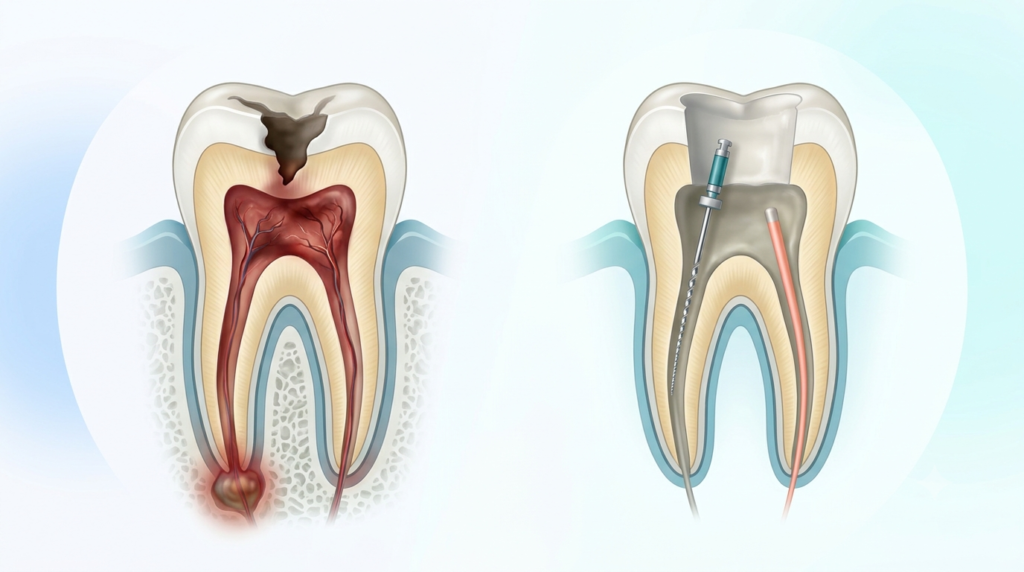
Root canal treatment, also called endodontic treatment, is a dental procedure used to treat infection or inflammation inside a tooth.
The inner part of a tooth contains soft tissue called pulp, which includes nerves and blood vessels. Deep tooth decay, cracks, injuries or repeated dental procedures can damage this pulp and cause infection.
During root canal treatment, the dentist:
- Removes the infected or damaged pulp.
- Cleans and disinfects the inside of the tooth.
- Fills and seals the root canals.
- Restores the tooth with an appropriate filling or dental crown.
The main purpose is to remove infection while preserving your natural tooth.
Is It Best to Avoid a Root Canal?
No, avoiding a root canal is not always the best decision. If your tooth has an infection that requires endodontic treatment, delaying or avoiding the procedure can lead to further complications.
- Increasing tooth pain and discomfort.
- Swelling around the affected tooth or gums.
- Formation of a dental abscess.
- Damage to surrounding tissues.
- Possible loss of the natural tooth.
However, a root canal is not necessary for every dental problem. Small cavities, mild sensitivity and some types of tooth damage may be treated with fillings or other procedures. The right treatment depends on a proper dental examination, diagnostic tests and dental X-rays when required.
Why Do People Want to Avoid Root Canal Treatment?
There are several reasons why patients hesitate to get a root canal.
1. Fear of Pain
Many people associate root canal treatment with severe pain. However, modern dentistry uses local anaesthesia to help patients remain comfortable during the procedure.
In many cases, the treatment helps relieve the pain caused by infection rather than creating additional pain.
2. Concern About the Cost
Some patients avoid root canal treatment because they are concerned about the expense. However, delaying treatment can allow the infection to progress and may lead to more complex dental procedures.
Treating the problem at the right time can help protect the natural tooth and avoid additional complications.
3. Fear of Losing the Tooth
Some people believe that a root canal makes a tooth weak or unusable. In reality, the purpose of root canal treatment is to save the natural tooth.
Depending on how much tooth structure remains, a dental crown may be recommended to provide additional protection.
4. Belief That Tooth Extraction Is Better
Extraction may seem like a quicker solution, but removing a natural tooth creates a gap that may need replacement with a dental implant, bridge or denture.
Whenever a tooth can be predictably saved, preserving it is generally worth considering.
What Happens If You Avoid a Root Canal?
If your dentist has confirmed that the tooth pulp is infected and requires root canal treatment, avoiding it can make the condition worse.
- Worsening Infection: Bacteria can continue spreading inside the tooth and surrounding tissues.
- Dental Abscess: An untreated infection may develop into an abscess, which can cause pain, swelling and pus formation.
- Severe Toothache: Pain may become more frequent or intense, particularly while chewing or at night.
- Tooth Loss: If the damage becomes too extensive, saving the natural tooth may no longer be possible.
It is important to remember that an infected tooth does not usually heal on its own. Early dental evaluation can help prevent the condition from becoming more complicated.
Are There Alternatives to Root Canal Treatment?
Yes, but the available alternatives depend on how severely the tooth is damaged. Not every dental problem requires a root canal. Your dentist may recommend another treatment if the pulp is healthy or the damage is limited.
1. Dental Filling
If tooth decay has not reached the pulp, a dental filling may be sufficient to remove the decayed portion and restore the tooth.
2. Pulp Therapy
In selected cases, when some of the pulp remains healthy, a dentist may consider a pulp-preserving procedure instead of a complete root canal.
3. Tooth Extraction
If the tooth is severely damaged, fractured or cannot be restored, extraction may be necessary. After removal, replacement options such as dental implants, bridges or dentures can be discussed.
Important: These treatments are not interchangeable. A dental examination is necessary to determine whether an alternative can safely treat your condition.
Is Root Canal Treatment Safe?
Yes. Root canal treatment is an established dental procedure used to remove infection and preserve natural teeth. With modern dental techniques, appropriate anaesthesia and proper sterilisation, the procedure can be performed comfortably in most cases.
After treatment, the dentist may recommend a permanent filling or crown depending on the remaining tooth structure. Regular dental check-ups and good oral hygiene also help maintain the treated tooth.
When Should You Visit a Dentist?
Do not ignore the following symptoms:
- Persistent or severe toothache.
- Pain while biting or chewing.
- Prolonged sensitivity to hot or cold foods.
- Swelling around the gums.
- A pimple-like swelling near the affected tooth.
- Darkening or discolouration of a tooth.
These symptoms do not automatically mean you need a root canal. However, they should be evaluated by a dentist. If you experience facial swelling, fever or rapidly worsening symptoms, seek urgent dental care. Difficulty breathing or swallowing requires emergency medical attention.
Conclusion:
Avoiding unnecessary dental treatment is always sensible, but avoiding a root canal when it is genuinely needed can put your natural tooth at risk. The best approach is to understand the condition of your tooth before making a decision. If the pulp is infected, root canal treatment may help remove the infection, relieve discomfort and preserve your natural tooth.
At Agrawal’s Multispeciality Dental Clinic, Ahmedabad, patients can receive a dental evaluation and guidance on suitable treatment options based on their individual dental condition. If you are experiencing persistent tooth pain or have been advised to undergo a root canal, consult a dentist to understand your options. Early treatment can help protect your smile and long-term oral health.