

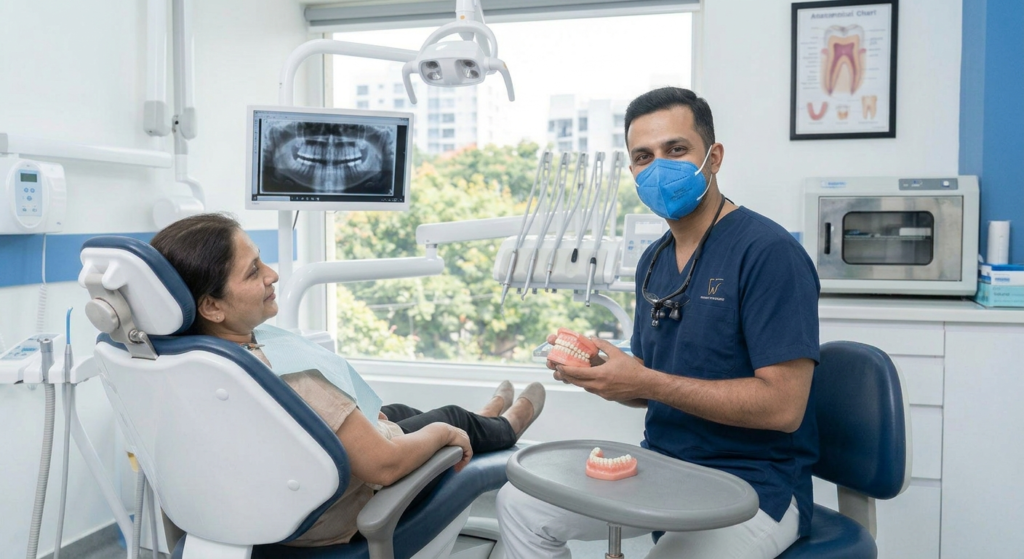
Missing teeth can affect more than your smile. They can make chewing difficult, affect speech and reduce confidence. Dentures are a common dental solution for replacing missing teeth and restoring everyday oral functions.
But many people ask, are dentures good for teeth? The answer is yes, dentures can be a good option for replacing missing teeth when they are properly designed, fitted and maintained. However, their suitability depends on your oral health, the number of missing teeth and your dental needs.
Let’s understand the benefits, risks, types and care tips for dentures.
What Are Dentures?
Dentures are removable dental appliances designed to replace missing teeth. They are usually made from materials such as acrylic resin, metal or a combination of materials.
Dentures help restore the appearance of your smile and support everyday activities such as eating and speaking. A dentist recommends the right type based on how many teeth are missing and the condition of your gums and remaining teeth.
Are Dentures Good for Teeth?
Yes, dentures can be good for people who have lost some or all of their natural teeth. They help fill gaps, improve chewing ability and support facial appearance.
However, dentures do not work exactly like natural teeth. They need proper fitting, regular cleaning and dental check-ups to maintain comfort and oral health.
Well-fitted dentures can help you:
- Replace missing teeth and restore your smile.
- Improve chewing and speaking ability.
- Support facial muscles and appearance.
- Reduce the difficulties caused by gaps in your teeth.
- Improve confidence in everyday social situations.
It is important to remember that dentures replace missing teeth but do not prevent all changes in the jawbone after tooth loss.
Benefits of Dentures
There are several benefits of dentures for people with missing teeth.
1. Improve Your Smile
Missing teeth can affect the appearance of your smile. Dentures fill these gaps and provide a more natural-looking appearance when properly designed.
2. Make Eating Easier
Missing teeth can make chewing certain foods difficult. Dentures help restore chewing function, although it may take some time to adjust to eating with them.
3. Support Facial Appearance
When several teeth are missing, the cheeks and lips may lose some support. Dentures can help restore facial fullness and improve overall appearance.
4. Improve Speech
Missing teeth can affect the way certain words and sounds are pronounced. Dentures help support clearer speech once you become comfortable wearing them.
5. Replace Multiple Missing Teeth
Depending on your dental condition, dentures can replace several missing teeth or an entire set of teeth without requiring an individual replacement for every missing tooth.
Types of Dentures for Missing Teeth
Different types of dentures are available depending on the number of missing teeth and the patient’s oral health.
1. Complete Dentures
Complete dentures are used when all natural teeth in the upper or lower jaw are missing. They replace an entire set of teeth and rest on the gums.
2. Partial Dentures
Partial dentures are suitable when some natural teeth are still present. They fill the gaps and may use clasps or other attachments for support.
3. Implant-Supported Dentures
These dentures are attached to dental implants placed in the jawbone. They generally provide better stability than conventional removable dentures.
4. Immediate Dentures
Immediate dentures are prepared before tooth extraction and placed soon after the teeth are removed. They can help avoid going without teeth during the initial healing period. Adjustments or replacement may be needed as the gums heal.
Advantages and Disadvantages of Dentures
Before choosing dentures, it is helpful to understand both their benefits and limitations.
Advantages:
- Replace missing teeth.
- Improve smile appearance.
- Support chewing and speech.
- Offer removable and implant-supported options.
- Can replace several teeth at once.
Disadvantages:
- May feel uncomfortable during the adjustment period.
- Can move or slip if they do not fit properly.
- Require daily cleaning and maintenance.
- May need adjustments or replacement over time.
- Do not prevent natural jawbone changes after tooth loss.
A dentist can explain whether dentures are right for you based on your dental condition.
Are Dentures Safe for Long-Term Use?
Yes, dentures are generally safe for long-term use when they are properly fitted and maintained. However, wearing poorly fitting or damaged dentures can cause gum irritation, mouth sores and discomfort.
Over time, the shape of your gums and jawbone may change, which can affect how dentures fit. Regular dental visits help identify these problems and determine whether adjustments or replacement are necessary.
Avoid repairing or adjusting dentures yourself, as this may damage the appliance or cause injury to your mouth.
Denture Care Tips: How to Keep Your Dentures Clean
Proper denture care is important for maintaining oral hygiene and extending the life of your dentures.
- Clean your dentures daily: Remove food particles and plaque using a soft denture brush and a suitable denture cleaner.
- Rinse after meals: Rinse your dentures with water to remove food debris.
- Handle them carefully: Clean dentures over a folded towel or a basin of water to reduce the risk of breakage if dropped.
- Keep them moist: Follow your dentist’s instructions about soaking dentures when they are not being worn.
- Clean your mouth: Brush your natural teeth, gums, tongue and the roof of your mouth gently.
- Visit your dentist regularly: Get your dentures checked to ensure they fit properly and remain comfortable.
Do not use hot water to clean dentures because it may change their shape.
When Should You Consider Getting Dentures?
- You have lost several teeth.
- You have lost all teeth in the upper or lower jaw.
- Missing teeth make chewing difficult.
- Tooth loss affects your speech or smile.
- Your dentist recommends replacing missing teeth to improve oral function.
A dental examination is necessary before choosing dentures. Your dentist may also discuss alternatives such as dental bridges or dental implants.
Frequently Asked Questions
1. Are dentures better than having missing teeth?
Dentures can be better than leaving multiple missing teeth untreated because they help restore chewing, speech and smile appearance. The right treatment depends on your oral health.
2. Can dentures damage natural teeth?
Properly fitted dentures generally do not damage natural teeth. However, poorly fitting partial dentures may put pressure on supporting teeth and gums. Regular dental check-ups are important.
3. How long do dentures last?
The lifespan of dentures depends on their material, maintenance and changes in your gums and jawbone. They may require adjustments, relining or replacement over time.
4. Are dentures painful to wear?
New dentures may cause temporary discomfort while your mouth adjusts. Persistent pain, sores or irritation should be checked by a dentist.
Conclusion
Dentures are a useful solution for replacing missing teeth and improving chewing, speech and smile appearance. They can be a good choice when properly fitted and maintained. However, choosing the right type of dentures requires an understanding of your oral health and dental needs.
At Agrawal’s Multispeciality Dental Clinic, Ahmedabad, patients can consult a dental professional to understand suitable options for replacing missing teeth. With proper guidance, fitting and regular care, dentures can help restore comfort and confidence in everyday life.