

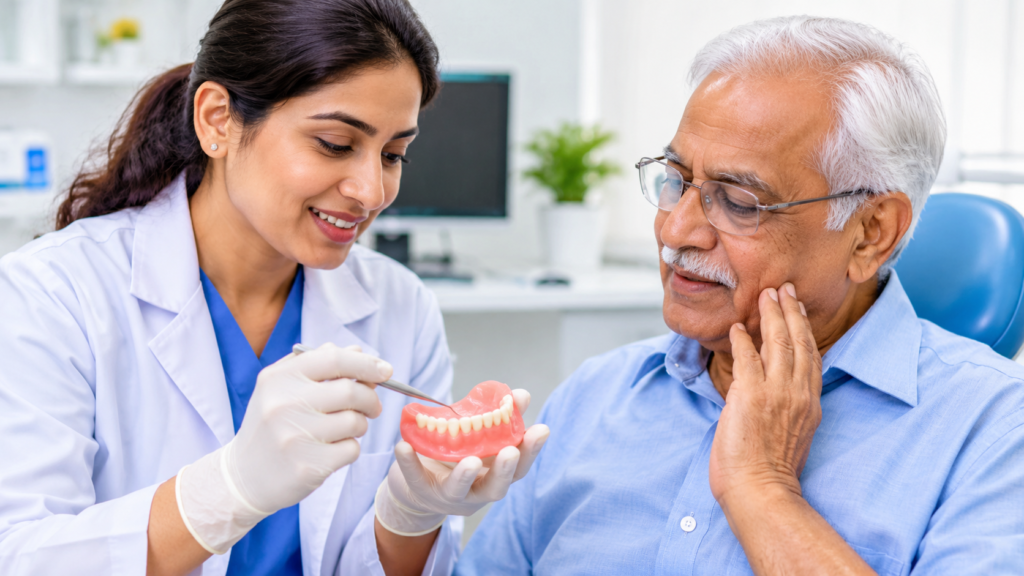
Wearing dentures for the first time can feel uncomfortable, especially while your mouth adjusts to them. Many people wonder is a denture painful to wear, and whether soreness is a normal part of the adjustment process.
The good news is that dentures should not cause persistent pain when they fit properly. However, new dentures may cause mild soreness, irritation or pressure in the beginning. Poorly fitting dentures can also lead to painful gums, mouth ulcers and difficulty chewing.
In this blog, we will explain why dentures may hurt, how long discomfort can last, how to make dentures more comfortable and when you should visit a dentist.
What Are Dentures?
Dentures are removable dental appliances designed to replace missing teeth. They help restore your smile, support facial appearance and make everyday activities such as speaking and chewing easier.
-
Complete dentures: Replace all the teeth in the upper or lower jaw.
-
Partial dentures: Replace a few missing teeth while keeping the remaining natural teeth.
-
Implant-supported dentures: Are supported by dental implants placed in the jawbone for improved stability.
The right type of denture depends on your oral health, the number of missing teeth, jawbone condition and individual dental needs.
Is a Denture Painful to Wear?
Wearing dentures is generally not painful when they are properly designed and fitted. However, you may experience some discomfort during the initial adjustment period.
Your gums, cheeks, tongue and jaw muscles need time to adapt to the new dental appliance. During this period, you might notice:
- Mild gum soreness or tenderness.
- Increased saliva production.
- Difficulty speaking clearly.
- Minor irritation around the gums.
- Slight discomfort while chewing food.
These symptoms often improve as your mouth gets used to the dentures. However, persistent pain, bleeding, swelling or mouth sores should not be ignored.
Why Do Dentures Cause Pain?
There are several reasons why dentures may cause discomfort. Understanding the cause can help you find the right solution.
1. Poorly Fitting Dentures
Dentures that do not fit properly may rub against your gums and soft tissues. This friction can cause irritation, pressure points and painful sores.
A dentist can examine the denture and make adjustments to improve its fit.
2. Gum Sensitivity
Your gums may become sensitive after tooth extraction or when you start wearing dentures. The pressure from a new dental appliance can make the healing tissues feel tender.
Following your dentist’s instructions during the healing period is important.
3. Incorrect Denture Alignment
If dentures do not sit correctly on your gums, they may move while you speak or chew. This movement can create uneven pressure and cause discomfort.
4. Changes in Your Jaw and Gums
Over time, your jawbone and gum tissues naturally change shape after tooth loss. As a result, older dentures may become loose or unstable.
Dentures that once fitted comfortably may start rubbing against your gums and causing pain.
5. Gum Infections or Mouth Sores
Poor denture hygiene and continuous irritation can contribute to mouth infections, inflammation and sores. Cleaning your dentures regularly and maintaining good oral hygiene can help reduce these problems.
How Long Does It Take to Get Used to New Dentures?
Getting used to new dentures takes time. Most people need a few weeks to adjust to wearing them comfortably.
During the first few days, you may experience mild soreness, increased saliva production or difficulty speaking and eating. These sensations generally improve as your mouth adapts.
Small sore spots may develop during the initial adjustment period. Your dentist can identify pressure points and adjust the dentures to improve comfort.
7 Tips to Make Wearing Dentures More Comfortable
If your dentures feel uncomfortable, these practical tips may help you adjust more easily.
1. Start with Soft Foods
Choose soft foods such as mashed potatoes, yoghurt, cooked vegetables and soft rice when you first start wearing dentures. Gradually introduce firmer foods as your comfort improves.
2. Eat Small Bites
Cut your food into smaller pieces and chew slowly. Try chewing on both sides of your mouth to distribute pressure evenly and reduce denture movement.
3. Practise Speaking
New dentures may temporarily affect your pronunciation. Reading aloud and practising everyday conversations can help you become more comfortable speaking.
4. Maintain Proper Denture Hygiene
Clean your dentures daily using a suitable denture cleanser and a soft brush. Also, clean your gums, tongue and any remaining natural teeth to maintain good oral health.
5. Remove Dentures as Advised
Most people should remove their dentures before sleeping to allow their gums to rest. However, follow your dentist’s specific instructions, particularly immediately after tooth extraction or denture placement.
6. Visit Your Dentist for Adjustments
Never ignore persistent soreness or pressure. Your dentist may adjust or reline your dentures to improve their fit and stability.
7. Avoid Adjusting Dentures Yourself
Do not cut, bend or file your dentures at home. Making changes without professional guidance can damage the appliance and make the fit worse.
When Should You Visit a Dentist for Denture Pain?
Mild discomfort during the adjustment period can be normal, but ongoing or severe pain requires professional attention.
Consult your dentist if you experience:
- Persistent gum pain or tenderness.
- Bleeding or swollen gums.
- Mouth ulcers or recurring sores.
- Dentures slipping while speaking or eating.
- Difficulty chewing food.
- Pain when inserting or removing dentures.
- Bad breath or signs of infection.
Your dentist will examine your gums, check the denture fit and recommend suitable treatment. Depending on the problem, adjustments, relining, or replacement may be necessary.
Are There Comfortable Alternatives to Traditional Dentures?
If traditional dentures repeatedly feel uncomfortable or unstable, you can discuss other tooth replacement options with your dentist.
1. Implant-Supported Dentures
These dentures are secured using dental implants placed in the jawbone. They can provide improved stability and reduce unwanted movement compared with conventional removable dentures.
2. Dental Bridges
A dental bridge replaces one or more missing teeth by using neighbouring teeth or implants for support, depending on the treatment plan.
3. Partial Dentures
If you still have some healthy natural teeth, partial dentures may help replace missing teeth without replacing the entire set.
The most suitable option depends on your oral health, bone condition, budget and treatment requirements. A dental examination is necessary before choosing a treatment.
Conclusion
So, Is a denture painful to wear? Not necessarily. Although new dentures may cause mild soreness and discomfort during the initial adjustment period, they should become more comfortable as your mouth adapts. Don’t ignore persistent pain, gum irritation, or loose-fitting dentures. Proper denture care, regular dental check-ups and professional adjustments can help improve comfort and protect your oral health.
At Agrawal’s Multispeciality Dental Clinic, patients can consult dental professionals about denture-related discomfort and suitable treatment options. Professional evaluation can help identify the cause of pain and determine the next steps for better oral comfort.