

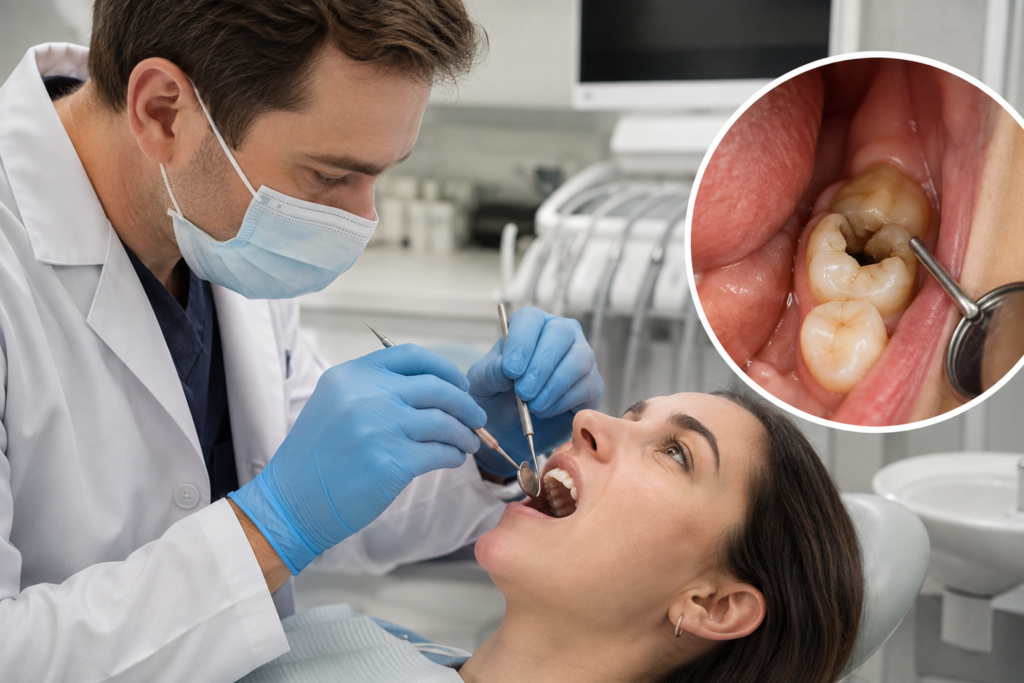
A damaged or weakened tooth can affect much more than your smile. It may make chewing uncomfortable, cause sensitivity, or leave you worried that the tooth could break further. In some cases, a simple filling may be enough. But when a tooth has lost significant structure, a dental crown may provide the protection and strength it needs.
If you are considering Dental Crowns in Ahmedabad, understanding when a crown is recommended and what benefits it offers can help you make a more informed decision.
What Is a Dental Crown?
A dental crown is a custom-made restoration that fits over a damaged or weakened tooth. It is designed to restore the tooth’s shape, strength, function and appearance.
Crowns may be recommended when a tooth has been significantly weakened by decay, a large restoration, a fracture or other structural damage. Your dentist will examine the tooth and determine whether a crown is appropriate based on its remaining structure and overall oral health.
A crown is not automatically the right solution for every damaged tooth. The treatment should be based on an individual dental examination.
When Do You Need a Dental Crown?
One of the most common questions patients ask is, “Do I really need a dental crown?”
A dentist may recommend a crown in situations such as:
1. A Severely Damaged or Broken Tooth
If a tooth has lost a substantial amount of its natural structure, placing a traditional filling may not provide enough support. A crown can cover and protect the remaining tooth.
2. A Tooth With Extensive Decay
Large cavities can weaken the walls of a tooth. Once too much tooth structure has been lost, a crown may help restore its strength and function after the decay has been treated.
3. A Tooth That Has Undergone Root Canal Treatment
Root canal-treated teeth can require additional protection because the tooth may have lost significant structure during treatment and from the original disease process. Depending on the tooth and remaining structure, a crown may be recommended to reduce the risk of further damage.
4. A Cracked or Weakened Tooth
Some cracks can compromise the strength of a tooth. If the tooth is suitable for restoration, a crown may help hold and protect the remaining structure. However, not every cracked tooth can be saved with a crown, which is why professional evaluation is important.
5. A Worn or Misshapen Tooth
In selected cases, crowns can restore the shape and function of teeth that are significantly worn or damaged. Your dentist will first identify the underlying cause before recommending restorative treatment.
Key Benefits of Dental Crowns
The main purpose of a dental crown is not simply to make a tooth look better. It can also help restore function and protect compromised tooth structure.
Protects a Weakened Tooth
A crown surrounds the visible portion of a prepared tooth and can provide additional protection against everyday chewing forces.
Restores Chewing Function
A severely damaged tooth may make chewing uncomfortable or difficult. Restoring its shape can help improve its ability to participate in normal biting and chewing.
Improves the Appearance of the Tooth
Modern crowns can be designed to resemble natural teeth in shape and colour. This can be particularly important when restoring visible teeth.
Helps Restore Tooth Shape
A damaged tooth may become uneven, shortened or misshapen. A crown can restore a more natural-looking tooth shape when clinically appropriate.
Provides Long-Term Protection
With proper treatment and good oral hygiene, a dental crown can provide long-term service. However, its longevity depends on factors such as oral hygiene, bite forces, the condition of the supporting tooth and regular dental care.
Dental Crown vs Filling: Which One Do You Need?
A filling and a crown serve different purposes.
A dental filling generally restores a tooth after decay or minor damage while preserving as much natural tooth structure as possible.
A dental crown is more extensive and may be considered when a tooth has lost enough structure that additional coverage and protection are needed.
The best option depends on how much healthy tooth remains, the location of the tooth, the extent of damage, your bite and other clinical factors.
This is why choosing a treatment based only on price or appearance may not be appropriate. A dentist should assess the tooth before recommending a restoration.
What Happens During Dental Crown Treatment?
The exact process depends on your tooth and treatment plan, but it commonly involves:
Step 1: Dental examination
Your dentist examines the tooth and may recommend dental imaging when necessary.
Step 2: Treatment planning
The dentist determines whether the tooth can be restored and whether a crown is suitable.
Step 3: Tooth preparation
The damaged tooth is carefully prepared to create space for the crown.
Step 4: Crown fabrication
Measurements or digital information are used to create a restoration designed to fit the tooth.
Step 5: Crown placement
Once the crown is ready and its fit and appearance have been assessed, it is placed according to the treatment plan.
How Do You Care for a Dental Crown?
A crowned tooth still requires daily care. The crown itself cannot develop decay, but the natural tooth underneath and around its margins can still be affected by plaque and bacteria.
To maintain your restoration:
- Brush twice a day with fluoride toothpaste.
- Clean carefully between your teeth every day.
- Avoid using your teeth to open packages or bite hard objects.
- Follow your dentist’s recommendations.
- Attend regular dental check-ups.
- Tell your dentist if the crown feels loose, painful or uncomfortable.
Good oral hygiene is particularly important for protecting the tooth supporting the crown.
How to Choose Dental Crowns in Ahmedabad
If you are looking for Dental Crowns in Ahmedabad, focus on more than the crown material or advertised price. Consider the dentist’s experience, diagnostic approach, treatment planning, technology, sterilization standards and follow-up care.
A reliable dental clinic should explain why a crown is recommended, what alternatives may be available and what you can realistically expect from treatment. For patients comparing options, choosing the best dental clinic in Ahmedabad should mean finding a clinic where treatment is based on proper diagnosis and personalized dental care rather than a one-size-fits-all approach.
FAQ
1. Is getting a dental crown painful?
The tooth is normally treated using appropriate local anesthesia during preparation. Some patients may experience temporary sensitivity or gum discomfort afterward, but your dentist can guide you on what to expect based on your individual treatment.
2. How long does a dental crown last?
There is no single guaranteed lifespan for every crown. Longevity depends on the material, oral hygiene, bite, supporting tooth and regular dental care.
3. Can a crown fix any broken tooth?
No. A crown may be suitable for some damaged teeth, but severely fractured or compromised teeth may require another treatment. A dental examination is necessary to determine whether the tooth can be restored.
4. Can I eat normally after getting a crown?
Your dentist will advise you about eating immediately after treatment. Once the restoration is properly placed and any temporary restrictions have passed, the goal is to restore normal function.
5. Are dental crowns only used for cosmetic purposes?
No. Crowns can have important restorative purposes, including protecting weakened teeth and restoring their shape and function. Their appearance can also be improved with modern materials.
Conclusion
A dental crown can be an effective way to restore a tooth that has been significantly damaged, weakened or structurally compromised. However, not every tooth needs a crown. The right treatment depends on the condition of the tooth, the amount of healthy structure remaining and your overall oral health. If you are experiencing a broken tooth, extensive decay, sensitivity, discomfort while chewing or a weakened tooth, don’t wait for the problem to become worse. A professional examination can help identify the cause and determine whether a crown or another treatment is appropriate.