

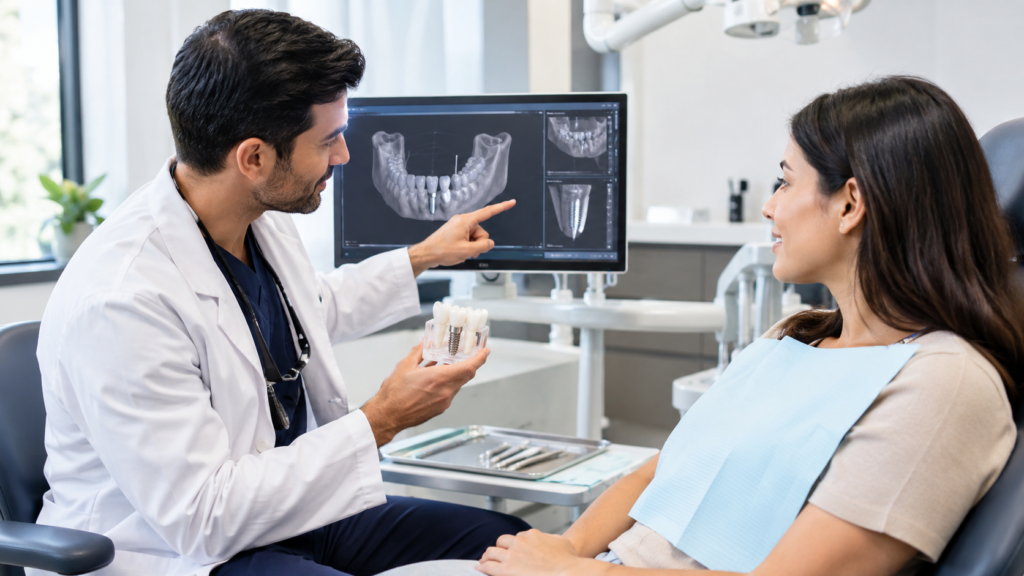
A dental implant before and after journey involves much more than replacing a visible missing tooth. Treatment usually begins with an examination and personalised planning, followed by implant placement, healing, and attachment of the final crown, bridge, or denture. The completed restoration is designed to improve chewing, appearance, comfort, and overall oral function.
The final result is not immediate. The implant needs time to integrate with the jawbone, while the surrounding gums heal and adapt. Your treatment timeline and results depend on your bone health, gum condition, number of missing teeth, bite, and the type of restoration selected.
What Does a Dental Implant Replace?
A dental implant replaces the root portion of a missing tooth. It is placed into the jawbone and eventually supports a replacement tooth.
- Implant: The artificial tooth root placed into the jawbone.
- Abutment: The connector between the implant and restoration.
- Crown, bridge, or denture: The visible replacement for the missing tooth or teeth.
Once healing occurs, the implant can provide a stable foundation for the final restoration.
Dental Implant Before and After: What Changes?
Before treatment, you may have a visible gap, difficulty chewing, or discomfort caused by a damaged tooth. Some people may also experience changes in their bite or feel uncomfortable smiling.
After the implant has healed and the final restoration has been fitted, the missing space can be restored with a tooth designed to match the surrounding teeth. Chewing may become more comfortable, and the smile can appear more complete.
However, every case is different. Factors such as bone volume, gum health, tooth position, facial appearance, and the quality of the final crown influence the result. Therefore, another person’s before-and-after photograph should never be considered a guarantee of your own outcome.
What Happens During Dental Implant Treatment?
1. Consultation and Examination
Your dentist first evaluates your teeth, gums, jawbone, bite, and overall oral condition. Dental imaging may be recommended to assess bone support and determine the best implant position.
2. Treatment Planning
A personalised treatment plan is prepared based on the number and location of missing teeth. If gum disease, infection, tooth extraction, or insufficient bone is present, these issues may need to be addressed first.
3. Implant Placement
The implant is carefully positioned in the jawbone under appropriate anaesthesia. The goal is to create a stable foundation for the future restoration.
4. Healing and Osseointegration
The implant needs time to integrate with the surrounding bone. This process, known as osseointegration, is an important part of achieving implant stability.
5. Final Restoration
Once the dentist confirms that healing is progressing appropriately, the final crown, bridge, or denture can be designed and fitted. The restoration is adjusted to provide a comfortable bite and natural appearance.
What to Expect Immediately After Implant Surgery
It is normal for the treated area to look different immediately after surgery than it does in a final dental implant before-and-after photograph. Mild swelling, tenderness, bruising, or sensitivity may occur during the initial recovery period.
Your dentist will provide specific instructions about cleaning, eating, medication, and activities. Following these instructions carefully can support proper healing.
Avoid judging your final result during the first few days. The gums and surrounding tissues need time to heal and settle.
Dental Implant Healing and Recovery
Dental implant healing occurs gradually. During the first few days, the gum tissues begin recovering from the procedure. Swelling and tenderness generally reduce as healing progresses.
The deeper healing process continues for weeks or months as the implant integrates with the jawbone. Even if you feel comfortable during normal activities, the implant may still be healing beneath the gum.
The overall treatment time varies. Straightforward cases may require less time, while patients who need extraction, bone grafting, gum treatment, or multiple implants may require a longer treatment period.
Front Tooth Implant Before and After
Replacing a front tooth requires particular attention because it is highly visible when you smile or speak.
The dentist may consider the colour, shape, size, position, gum line, and surrounding teeth when planning the restoration. The goal is to create an implant crown that blends naturally with your smile.
For front teeth, achieving an attractive result may require detailed planning of both the tooth and the surrounding gum tissues.
Back Tooth Implant Before and After
Back teeth are important for chewing and are exposed to significant biting forces. When a molar or premolar is missing, you may find yourself chewing mainly on the opposite side.
A dental implant can support a replacement tooth designed to restore the missing chewing surface. For back teeth, strength, stability, bite balance, and long-term function are particularly important.
Single vs Multiple Dental Implants
A single missing tooth can often be replaced with one implant and one crown. When several teeth are missing, an implant-supported bridge may be considered.
Patients who have lost many or all teeth may be candidates for implant-supported dentures or full-arch restorations. The number of implants and type of restoration depend on bone condition, gum health, bite, and individual treatment requirements.
How Long Does It Take to See the Final Result?
The complete dental implant process may take several months, although treatment time varies from patient to patient.
- Number of implants required
- Location of the missing tooth
- Jawbone condition
- Gum health
- Need for bone grafting
- Tooth extraction
- Healing response
- Type of final restoration
Your dentist can provide a more accurate timeline after a complete examination.
How to Maintain Your Dental Implant
Good aftercare is essential for protecting your dental implant results. Although an implant crown cannot develop tooth decay like a natural tooth, plaque and bacteria can still affect the gums and bone surrounding the implant.
Brush regularly, clean between your teeth as recommended, and attend routine dental check-ups. Your dentist may suggest interdental brushes, floss, or other cleaning aids based on your restoration.
Avoid smoking and tobacco products, as they can interfere with healing and increase the risk of complications.
Contact your dentist if you experience persistent swelling, bleeding, pain, bad taste, or movement around the implant or crown.
How to Evaluate Dental Implant Before and After Photos
Before-and-after photographs can be useful when researching treatment, but they should be interpreted carefully.
- Matches the surrounding teeth
- Has a natural-looking shape and colour
- Fits appropriately within the smile
- Has a healthy-looking gum line
- Appears proportionate to neighbouring teeth
Remember that every patient has different bone structure, gum shape, tooth colour, facial features, and bite. Your result may therefore look different from examples you see online.
Who Can Get Dental Implants?
Many adults with missing or severely damaged teeth may be considered for dental implants. However, suitability depends on individual oral health and treatment requirements.
Your dentist may assess your gums, jawbone, oral hygiene, bite, smoking habits, and relevant medical factors. Existing gum disease or other oral problems may need to be treated before implant placement. A professional examination and appropriate dental imaging are necessary to determine whether implants are suitable for you.
Conclusion
A dental implant before and after transformation is the result of several carefully planned stages not simply the placement of an artificial tooth.
Treatment begins with diagnosis and planning, followed by implant placement and a healing period that allows the implant to integrate with the jawbone. Once healing is complete, a custom crown, bridge, or prosthesis is fitted to restore the missing tooth. The best implant result combines a natural appearance with comfortable chewing, stability, healthy surrounding tissues, and proper long-term maintenance.
If you are considering dental implants cost in Ahmedabad, speak with a qualified dental professional for an examination and personalised treatment plan. Your individual oral health, bone condition, gum health, bite, and aesthetic requirements should determine the treatment not simply a comparison with someone else’s before-and-after photograph.