

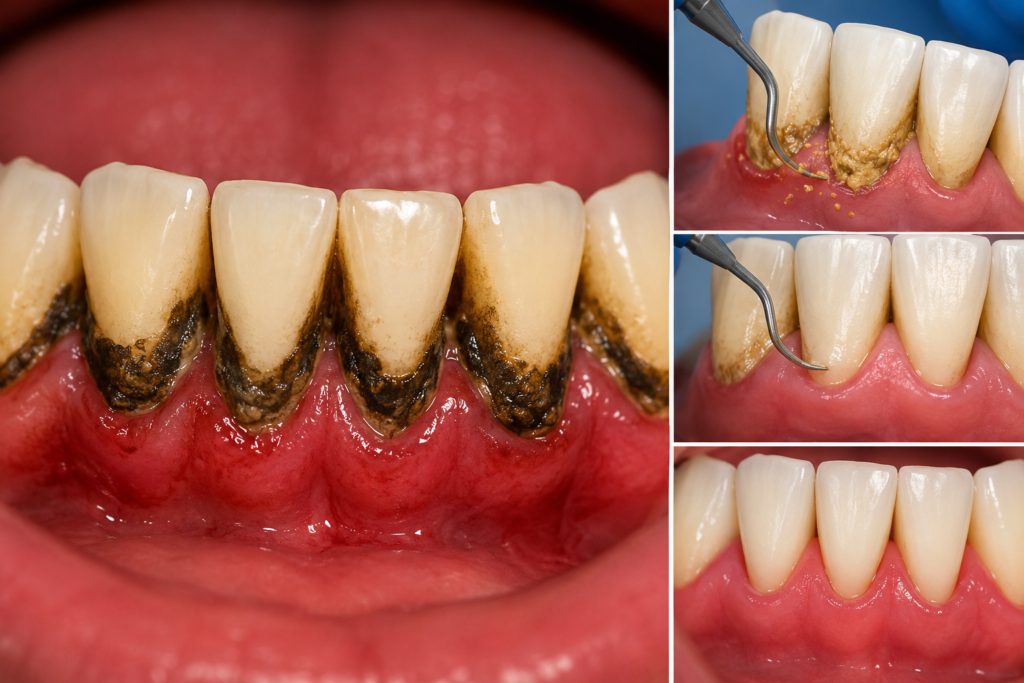
Many people ask, “Is black tartar a sign of gum disease?” The answer is often yes. Black tartar on teeth is usually a sign of long-term plaque and bacteria buildup around the teeth and gums. When plaque is not removed properly, it hardens into tartar and can turn dark brown or black over time. This buildup creates the perfect environment for bacteria, increasing the risk of gum disease.
Black tartar and gum disease are closely linked. If left untreated, black tartar can lead to bleeding gums, bad breath, swollen gums, gum recession, tooth sensitivity, and even loose teeth. These symptoms may indicate that the infection has started affecting the gums and the bone supporting the teeth. Early diagnosis and professional teeth cleaning can help prevent serious gum problems and protect your oral health.
Understanding the connection between black tartar and gum disease is the first step toward protecting your oral health and preventing more serious dental complications. In this guide, I will explain what black tartar is, why it forms, how it relates to gum disease, and when you should seek professional treatment.
What Is Black Tartar?
Black tartar is hardened plaque that has accumulated on the teeth and below the gum line over time. Plaque is a sticky film of bacteria that naturally forms on teeth every day. When plaque is not removed through regular brushing and flossing, it hardens into tartar.
Over time, tartar can become dark brown or black due to:
- Long-term bacterial buildup
- Smoking or tobacco use
- Tea and coffee stains
- Iron supplements
- Blood pigments from inflamed gums
- Poor oral hygiene
Unlike plaque, black tartar cannot be removed with regular brushing at home.
Is Black Tartar a Sign of Gum Disease?
Yes. In many cases, black tartar and gum disease go hand in hand.
When tartar builds up around the gum line, it creates an ideal environment for harmful bacteria. These bacteria irritate the gums and trigger inflammation. Initially, this leads to gingivitis, the earliest stage of gum disease. If left untreated, gingivitis can progress to periodontitis, a more serious condition that can damage the bone supporting your teeth.
Common signs include:
- Bleeding gums, especially while brushing or flossing
- Red, swollen, or tender gums
- Persistent bad breath that does not improve with regular oral hygiene
- Receding gums that make the teeth appear longer
- Increased tooth sensitivity to hot, cold, or sweet foods and drinks
- Loose or shifting teeth in advanced stages of gum disease
- Pain or discomfort while chewing
- Pus or infection around the gums and teeth
- Changes in the way your teeth fit together when you bite
If you notice any of these symptoms along with black tartar buildup, it is important to seek professional dental care as early as possible. The presence of black tartar often indicates that bacteria have been active for an extended period.
Why Does Black Tartar Form Near the Gums?
The gum line is one of the most difficult areas to clean properly.
Food particles, bacteria, and plaque easily accumulate between the teeth and gums. Over time, this plaque hardens into tartar.
When tartar develops beneath the gums, it becomes even more dangerous because it cannot be seen easily.
This hidden buildup can gradually destroy gum tissue and supporting bone without causing immediate pain.
That is why regular dental check-ups and professional cleaning are essential.
The Connection Between Black Tartar and Gum Health
The relationship between black tartar and gum disease is straightforward.
Step 1: Plaque Formation
Bacteria combine with food particles and saliva to form plaque.
Step 2: Tartar Development
Plaque hardens into tartar when it remains on the teeth for several days.
Step 3: Gum Irritation
Tartar attracts additional bacteria, causing inflammation and redness.
Step 4: Gingivitis
The gums begin to bleed during brushing or flossing.
Step 5: Periodontal Disease
If untreated, the infection spreads deeper and affects the bone supporting the teeth.
Can Black Tartar Cause Tooth Loss?
Yes. Untreated black tartar can increase the risk of tooth loss. When tartar remains on the teeth and below the gum line for a long time, it creates an environment where harmful bacteria can grow and spread into the tissues and bone that support the teeth.
As gum disease advances, these bacteria gradually damage the gums, periodontal ligaments, and jawbone that keep the teeth firmly in place. Over time, this destruction can weaken the foundation of the teeth, causing them to become unstable and, in severe cases, fall out or require extraction.
Signs that the condition may have progressed include:
- Loose or shifting teeth
- New gaps developing between teeth
- Receding gums
- Persistent bad breath
- Pain or difficulty while chewing
- Increased tooth sensitivity
The good news is that early intervention can prevent serious complications. The sooner black tartar is professionally removed and gum disease is treated, the greater the likelihood of preserving your natural teeth and maintaining long-term oral health.
How Dentists Remove Black Tartar
Professional treatment is the safest and most effective way to remove black tartar.
Depending on the severity of the buildup, treatment may include:
Professional Scaling
Specialised instruments remove hardened tartar above and below the gum line.
Deep Cleaning (Scaling and Root Planing)
This treatment removes bacteria from deep periodontal pockets and smooths root surfaces.
Laser Gum Treatment
In some cases, advanced laser technology may be used to improve gum health and reduce bacterial infection.
Periodontal Therapy
Patients with advanced gum disease may require additional treatment and ongoing maintenance.
How to Prevent Black Tartar and Gum Disease
I recommend the following:
- Brush twice daily using fluoride toothpaste
- Floss every day
- Use an antimicrobial mouthwash
- Avoid tobacco products
- Limit sugary foods and drinks
- Schedule a professional teeth cleaning every six months
- Visit your dentist regularly for examinations
Consistent oral care dramatically reduces the risk of black tartar and gum disease.
When Should You Visit a Dentist?
You should schedule an appointment if you notice:
- Visible black or dark brown deposits along the teeth or gum line
- Bleeding gums while brushing, flossing, or eating
- Persistent bad breath that does not improve with regular oral hygiene
- Swollen, red, or tender gums
- Receding gums that make the teeth appear longer
- Increased tooth sensitivity to hot, cold, or sweet foods and drinks
- Loose or shifting teeth, especially in adults
Early diagnosis can prevent serious complications and help protect your smile.
Why Choose Agrawal Dental Clinic for Gum Treatment in Ahmedabad?
At Agrawal Dental Clinic, we have been helping patients achieve healthier smiles for more than 27 years.
- Advanced dental cleaning
- Gum disease treatment
- Digital dental diagnostics
- Preventive dental care
- Personalised treatment plans
With clinics in Satellite and Shahibaug, we are committed to providing modern and effective dental care for patients across Ahmedabad.
Conclusion
Black tartar on teeth often signals gum disease. It can mean harmful bacteria are causing gum inflammation and infection, which may lead to tooth loss if untreated. Professional dental treatment can remove black tartar on teeth and help prevent further damage. Early care is usually simpler and more effective. If you notice black tartar on your teeth or gums, schedule a dental checkup. A dentist can identify the cause, provide treatment, and help keep your mouth healthy.
FAQ
1. Can black tartar be removed at home?
No. Once plaque hardens into tartar, professional dental cleaning is required.
2. Is black tartar dangerous?
Yes. Black tartar can contribute to gum disease, tooth decay, and even tooth loss if left untreated.
3. Does black tartar always mean gum disease?
Not always, but it is a strong warning sign that a professional dental evaluation is needed.
4. How much does black tartar removal cost in Ahmedabad?
The cost varies depending on the severity of the buildup and whether deep cleaning or gum treatment is required.
5. How often should I get my teeth cleaned?
Most patients benefit from professional cleaning every six months, although some may require more frequent visits.
6. Can black tartar come back after cleaning?
Yes. Without proper oral hygiene and regular dental visits, tartar can build up again over time.