

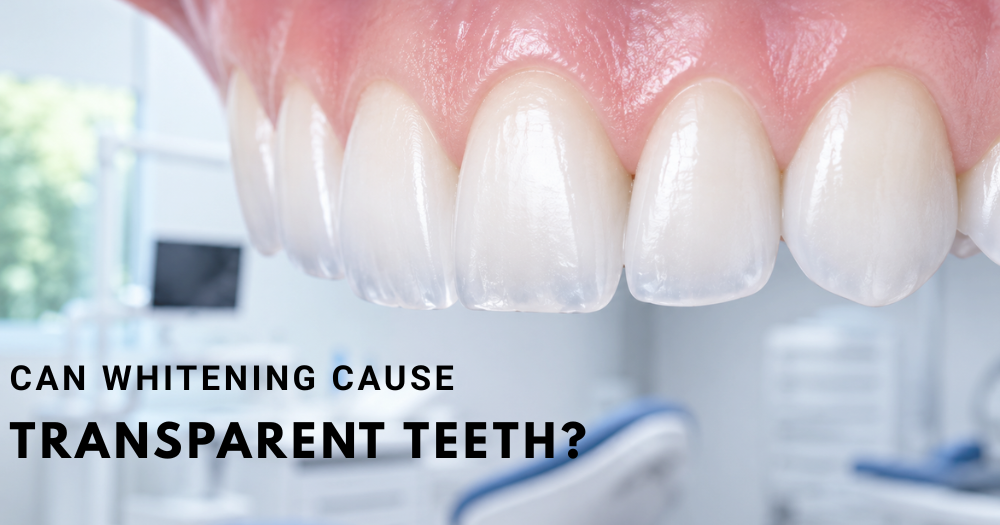
Have you noticed that your teeth look slightly transparent, especially around the edges, after teeth whitening? You may wonder, “Can whitening cause transparent teeth?”
Teeth whitening can temporarily make existing translucency more noticeable, but professional teeth whitening does not normally make healthy enamel disappear or become permanently transparent. The appearance of translucent teeth can also be related to naturally thinner enamel at the tooth edges, enamel erosion, dehydration, or other dental conditions.
Understanding the reason behind transparent-looking teeth can help you choose the right treatment and protect your enamel.
Can Whitening Cause Transparent Teeth?
Teeth whitening does not normally cause healthy teeth to become transparent. However, whitening can sometimes make the natural translucency of teeth more noticeable.
The edges of front teeth naturally allow some light to pass through because enamel is thinner in these areas. After whitening, the contrast between the whiter tooth surface and the naturally translucent edge may become more noticeable.
If your teeth suddenly look significantly more transparent, particularly if you also experience sensitivity, changes in tooth shape, or visible enamel wear, it is worth having them examined by a dentist.
Why Do My Teeth Look Transparent After Whitening?
There are several possible reasons why teeth may look transparent after whitening.
1. Natural Tooth Translucency
Healthy enamel is naturally somewhat translucent. The incisal edges of front teeth are often more transparent because there is less underlying dentine in these areas.
Whitening can make the rest of the tooth appear brighter, making this natural translucency easier to notice.
2. Temporary Dehydration
Teeth can temporarily lose some moisture during dental procedures or prolonged exposure to whitening products. Dehydrated enamel can appear lighter or more opaque.
As the teeth rehydrate, their appearance may change again.
3. Existing Enamel Wear
If enamel has already been affected by acid erosion, grinding, aggressive brushing, or other factors, the teeth may already have areas of increased translucency.
Whitening may make these areas more noticeable, rather than being the original cause of the enamel problem.
4. Enamel Erosion
Acid exposure from frequent consumption of acidic foods and drinks can gradually weaken tooth enamel. As enamel becomes thinner, the underlying dentine and natural translucency of the tooth can become more visible.
5. Whitening Product Misuse
Using whitening products too frequently or incorrectly can increase the risk of tooth sensitivity and irritation. Following the recommended instructions and seeking professional advice can help reduce unnecessary risks.
Does Teeth Whitening Damage Enamel?
When professionally performed and appropriately used, teeth whitening is generally considered safe for teeth and does not normally cause significant permanent enamel loss.
However, sensitivity and gum irritation can occur, particularly with higher concentrations or improper use of whitening products.
The important point is that whitening and enamel erosion are not the same thing. If teeth appear transparent, a dentist can determine whether the appearance is simply natural translucency or whether there are signs of enamel wear or another dental problem.
Why Are the Edges of My Teeth Transparent?
Transparent or slightly translucent front-tooth edges are often normal.
The enamel becomes thinner toward the biting edge of many front teeth. Since enamel is naturally translucent, light can pass through this thinner area and create a transparent appearance.
However, if the transparency is becoming more pronounced, the edges are chipping, or the teeth are becoming sensitive, an examination can help identify the underlying cause.
Can Transparent Teeth Become Normal Again?
It depends on what is causing the transparency.
If the appearance is due to natural translucency or temporary dehydration, the teeth may look less transparent over time.
However, lost tooth enamel does not naturally grow back. If enamel has been significantly worn away, treatment focuses on protecting the remaining tooth structure and restoring the appearance or function where necessary.
A dentist may recommend preventive measures, bonding, restorative treatment, or other options depending on the condition of the teeth.
How Can You Protect Your Enamel After Whitening?
After teeth whitening, good oral care can help protect your teeth and reduce sensitivity.
- Follow your dentist’s whitening instructions.
- Avoid excessive or repeated whitening without professional guidance.
- Use a soft-bristled toothbrush.
- Avoid brushing too aggressively.
- Limit frequent exposure to acidic foods and drinks.
- Rinse your mouth with water after consuming acidic beverages.
- Maintain regular dental check-ups.
- Tell your dentist if you develop persistent sensitivity.
- Avoid using multiple whitening products at the same time unless a dental professional recommends them.
When Should You See a Dentist?
Slight translucency around the edges of the teeth can be completely normal. However, you should consider a dental examination if you notice:
- Teeth becoming increasingly transparent
- Persistent tooth sensitivity
- Yellowing or darker areas underneath thinning enamel
- Cracks or chips
- Changes in tooth shape
- Pain when eating or drinking
- Rough or uneven tooth surfaces
- Increased enamel wear
A dentist can examine the teeth and determine whether the transparency is natural or related to enamel erosion, tooth wear, or another condition.
Final Thoughts
Can whitening cause transparent teeth? Usually, whitening does not directly make healthy teeth permanently transparent. Instead, it may make natural translucency or existing enamel changes more noticeable. If your teeth have become noticeably transparent after whitening, particularly if you also have sensitivity or visible enamel changes, a dental examination can help identify the cause.
At Agrawal’s Multispeciality Dental Clinic, a dental professional can assess your teeth and recommend an appropriate approach based on your enamel condition, sensitivity, and cosmetic goals.