

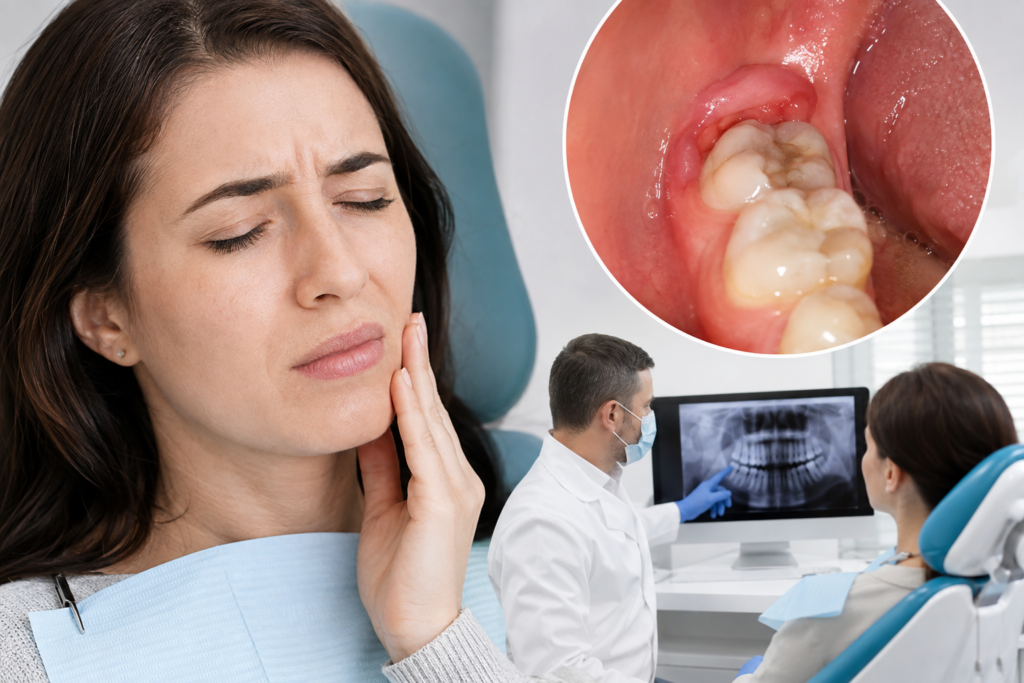
Wisdom tooth pain can be frightening, especially if you’re not sure what’s causing it or whether it’s serious. You may be asking, “Is wisdom teeth painful, and will it go away on its own?”
Take a breath. In most cases, wisdom teeth problems are common, well understood, and very treatable. In this guide, we’ll explain what’s normal, what isn’t, and when to see a dentist, in simple language and without the fear.
Key Takeaways
- Wisdom teeth are not painful for everyone, but they often hurt when there isn’t enough room for them to grow.
- Common causes of pain include impaction, gum infection (pericoronitis), decay, and crowding.
- Warning signs include jaw pain, swollen gums, bad breath, headaches, and difficulty opening your mouth.
- Home remedies like salt-water rinses and cold compresses give temporary relief only.
- Pain from infection or impaction rarely goes away on its own.
- Not every wisdom tooth needs removal, but an X-ray and dental exam are the only way to know.
- Wisdom tooth removal is done under local anaesthesia, so the procedure itself should not hurt.
- Early check-ups mean simpler treatment and faster recovery.
What Are Wisdom Teeth?
Wisdom teeth, also called third molars, are the last set of teeth to appear. They usually erupt between the ages of 17 and 25. Most adults have four, one in each back corner of the mouth, though some people have fewer or none at all.
Our ancestors needed these extra molars to grind tough, raw food. Today, our jaws are generally smaller, and there often isn’t enough room for them to come in properly. That lack of space is the root cause of most wisdom teeth problems.
Is Wisdom Teeth Painful for Everyone?
No. Not every wisdom tooth causes pain. If your teeth have enough room to emerge straight and fully, you may never notice them. Trouble usually starts when they:
- Grow at an angle
- Remain trapped beneath the gum or bone (impacted)
- Emerge only partially
- Push against neighbouring teeth
Pain is your body’s signal that something isn’t right, so it should never be ignored.
Common Reasons Wisdom Teeth Cause Pain
1. Impaction
When a wisdom tooth can’t break through the gum, it stays trapped and presses on nearby teeth and nerves. This creates a deep, persistent ache that may spread to the jaw, ear, or head.
2. Pericoronitis (Gum Infection)
A partially erupted tooth leaves a small gum flap where food and bacteria collect. This can lead to swelling gum, redness, bad breath, a bad taste, and pain.
3. Crowding and Pressure
Wisdom teeth can push against the second molars, causing discomfort and, in some cases, shifting of other teeth.
4. Tooth Decay
Because they sit so far back, wisdom teeth are hard to brush and floss. Cavities can develop quickly, and the decay can spread to the neighbouring tooth.
5. Cysts or Gum Disease
In rare cases, fluid-filled sacs (cysts) form around impacted teeth and may damage the jawbone or nearby roots if left untreated.
Signs Your Wisdom Teeth Are Causing Trouble
Watch for these symptoms:
- Pain or tenderness at the back of the jaw
- Swollen, red, or bleeding gums
- Difficulty opening your mouth fully
- Bad breath or an unpleasant taste
- Headaches or earache on one side
- Swelling around the jaw or cheek
- Pain while chewing
If you notice more than one of these, book an appointment rather than waiting for the pain to pass.
How Long Does Wisdom Tooth Pain Last?
Mild discomfort while a tooth is erupting may come and go over a few days or weeks. However, pain caused by infection or impaction typically does not go away on its own. It often returns, sometimes more severely.
When Should Wisdom Teeth Be Removed?
Not every wisdom tooth needs to come out. Removal is generally recommended when a tooth is:
- Repeatedly infected
- Impacted and causing pain
- Damaging neighbouring teeth
- Affected by decay that can’t be restored
- Associated with a cyst or other jaw problem
A dentist will examine the area and usually take an X-ray (such as an OPG) to see the tooth’s position, root shape, and its relationship to nerves and surrounding teeth. This helps determine the safest treatment plan.
Is Wisdom Tooth Removal Painful?
Many people fear the procedure more than the problem. In reality, modern wisdom tooth extraction is done under effective local anaesthesia, so you shouldn’t feel pain during treatment. You may feel pressure, but not sharp pain.
Afterwards, mild soreness, swelling, and stiffness are normal for a few days. These can be managed with prescribed medication, cold compresses, rest, and soft foods. Following your dentist’s aftercare instructions closely helps you heal faster and avoids complications such as dry socket.
Why Professional Care Matters
Wisdom teeth sit close to important structures, including nerves and the jawbone. Accurate diagnosis, proper sterilisation, and an experienced hand make a real difference to comfort and recovery. Choosing the best dental clinic in Ahmedabad means looking beyond convenience. Look for:
- Qualified, experienced dentists
- Modern diagnostic tools like digital X-rays
- Strict hygiene and sterilisation protocols
- Clear explanations and transparent treatment plans
- Gentle, patient-focused care
At Agrawal Dental Clinic, we take time to understand your symptoms, explain your options in plain language, and recommend treatment only when it is truly needed.
Can You Prevent Wisdom Teeth Problems?
You can’t change how your jaw develops, but you can catch problems early:
- Visit your dentist every six months
- Get an X-ray in your late teens or early twenties to monitor wisdom teeth
- Brush twice daily and floss, paying attention to the back teeth
- Don’t ignore mild discomfort or gum swelling
Early detection often means simpler, less invasive treatment.
Conclusion
So, is wisdom teeth painful? Not always, but when they are impacted, infected, or crowded, the pain can be significant and won’t resolve without treatment. The good news is that wisdom teeth problems are very manageable when diagnosed early by a skilled dentist. Don’t put up with a nagging ache or hope it disappears.
Ready to Get Relief?
If you’re experiencing jaw pain, swollen gums, or discomfort at the back of your mouth, book a consultation at Agrawal Dental Clinic today. Our team will examine your wisdom teeth, explain your options clearly, and help you get back to eating, smiling, and living pain-free.
📞 Call or visit agrawaldentalclinic.com to schedule your appointment.