
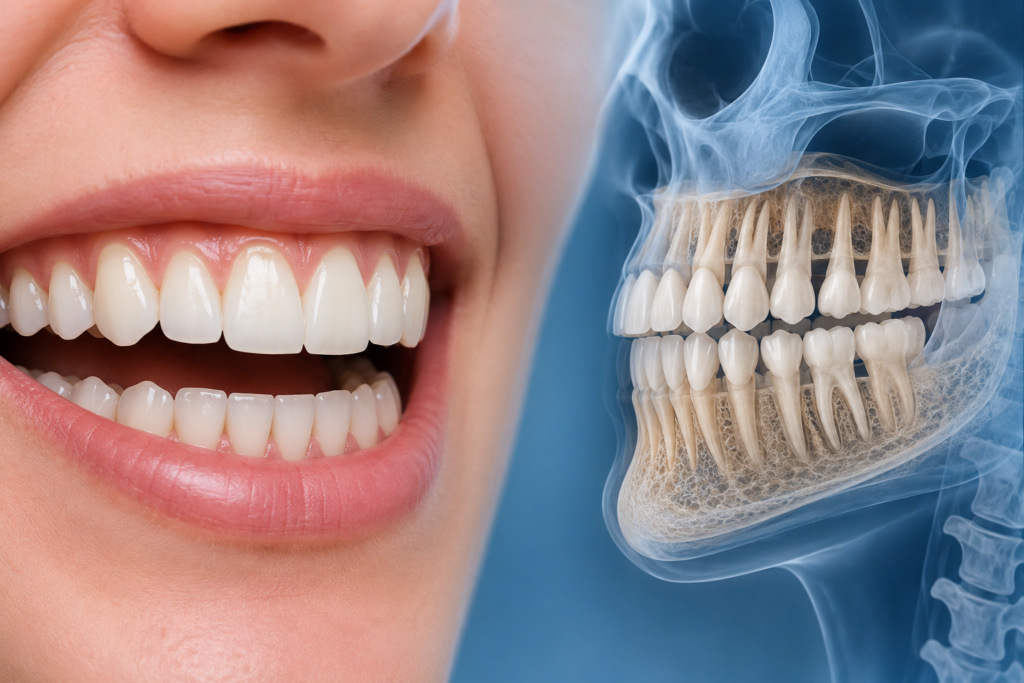
Have you ever wondered why some people have square teeth while others have more rounded, pointed, or unusually shaped teeth? The shape of your teeth is not random. It develops through a combination of genetics, tooth development, jaw growth, and environmental factors.
Every tooth has a specific shape and structure designed to perform a particular function. Front teeth help bite and cut food, while premolars and molars are designed to crush and grind it. However, teeth can vary considerably from person to person.
Understanding what causes teeth shape can help you recognise what is normal, what may be caused by a dental condition, and when professional dental care may be useful. At Agrawal Dental Clinic, dental and cosmetic treatments are available for concerns involving tooth shape, alignment, chips, gaps, and other smile-related issues.
What Causes Teeth Shape?
The shape of your teeth is primarily determined during tooth development. Several factors influence how teeth form, including genetics, inherited characteristics, jaw structure, and the environment around developing teeth.
1. Genetics Plays a Major Role
One of the most important answers to what causes teeth shape is genetics.
Genes inherited from your parents influence the size, width, length, and general shape of your teeth. They also influence the size and shape of your jaw, which can affect how your teeth fit together. This is why family members may have similar dental characteristics, such as:
- Naturally small or large teeth
- Rounded or square-shaped front teeth
- Naturally pointed teeth
- Variations in tooth size
- Similar jaw and bite patterns
2. Tooth Development Determines Its Basic Shape
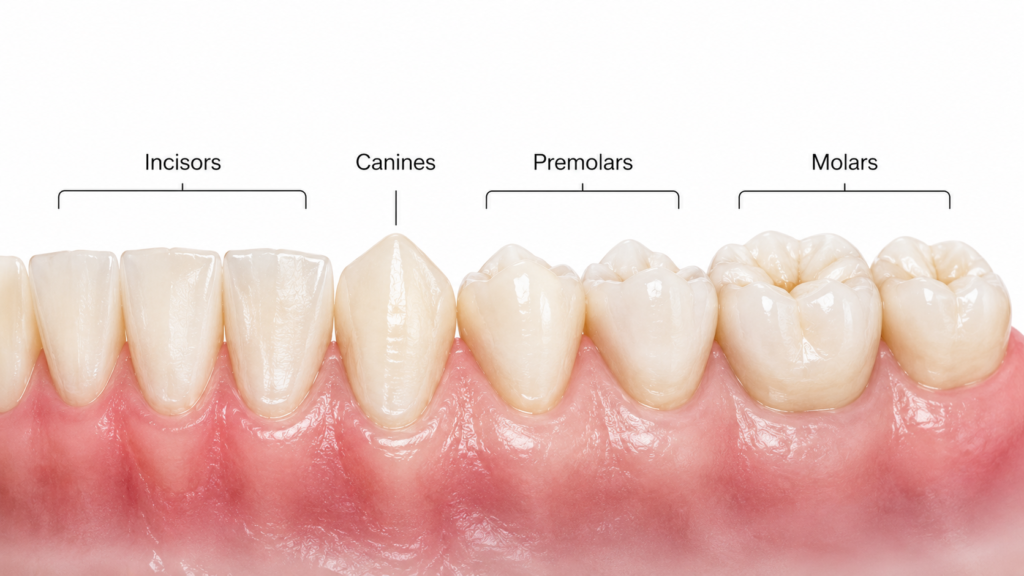
Different types of teeth develop with different shapes because they have different jobs.
Incisors: The incisors are the teeth at the front of your mouth. Their relatively flat, sharp edges help you bite and cut food.
Canines: Canines are usually more pointed than other teeth. Their shape helps with gripping and tearing food.
Premolars: Premolars have broader surfaces with raised areas that help break down food.
Molars: Molars are larger and have wider chewing surfaces. Their grooves and cusps are designed for grinding food.
3. Jaw Growth Can Influence Tooth Appearance
Your teeth do not develop independently from the rest of your mouth. The growth and development of your upper and lower jaws influence the available space for teeth. If the jaw is relatively narrow compared with the size of the teeth, teeth may appear crowded or rotated. If there is more space, teeth may have noticeable gaps between them.
Jaw growth can also affect the way your teeth appear in your smile. This is one reason why orthodontic assessment can be important when tooth shape and alignment concerns occur together.
4. Childhood Development Can Affect Tooth Shape
Permanent teeth begin developing during childhood, long before they become visible in the mouth. Disturbances during tooth development can sometimes affect their final appearance. Factors such as certain illnesses, nutritional problems, trauma to developing teeth, or other developmental disturbances may contribute to changes in enamel or tooth form.
Not every unusual-looking tooth indicates a problem. Some variations are completely harmless, while others may require evaluation by a dentist.
5. Tooth Shape Can Change With Age
Although the basic shape of a tooth is established during development, its appearance can change over time. Everyday chewing gradually causes natural wear. Over many years, this may make the edges of teeth look flatter or shorter.
- Tooth grinding or clenching
- Chipping
- Dental erosion
- Cavities
- Accidental injuries
- Certain dental treatments
Significant changes in tooth shape should not simply be considered part of ageing. A dental examination can help determine whether the change is due to normal wear or another condition.
6. Habits May Affect Tooth Shape Over Time
Some habits can place excessive pressure on teeth and contribute to changes in their appearance.
For example, frequent teeth grinding or clenching can gradually wear down tooth surfaces. Similarly, biting hard objects or using teeth to open packages can increase the risk of chips and fractures. These habits may not change the original shape of a developing tooth, but they can change the visible shape of teeth over time.
7. Dental Conditions Can Change Tooth Shape
Some teeth may naturally develop with unusual shapes. In other cases, dental conditions can affect the appearance of a tooth.
- Smaller than expected
- Larger than neighbouring teeth
- Pointed or unusually shaped
- Grooved or irregular
- Chipped or worn
- Shorter because of enamel loss
Some irregularities are purely cosmetic, while others may make cleaning difficult or affect chewing and oral health. If you notice a significant change in the shape of a tooth, it is best to have it evaluated rather than assuming it is normal.
Can You Change the Shape of Your Teeth?
Yes. In some cases, dentists can improve the shape or appearance of teeth using cosmetic or restorative procedures.
Depending on the condition, options may include enamel shaping or contouring, dental bonding, veneers, crowns, or orthodontic treatment. For minor irregularities, enamel contouring can reshape small areas of a tooth. Dental bonding can add tooth coloured material to modify the shape or size of a tooth. Agrawal Dental Clinic also offers cosmetic dental procedures such as enamel shaping, dental contouring, composite bonding, and veneers.
The appropriate treatment depends on the amount of tooth structure involved, your bite, oral health, and the result you want to achieve.
When Should You See a Dentist About Tooth Shape?
You may want to schedule a dental examination if:
- A tooth suddenly changes shape
- A tooth becomes chipped or cracked
- You notice significant tooth wear
- Your teeth appear unusually small or large
- Tooth shape makes brushing or flossing difficult
- You experience sensitivity along with visible tooth wear
- You are unhappy with the appearance of irregular teeth
A dentist can determine whether the shape is a natural variation or related to wear, damage, alignment, or another dental concern.
FAQs
1. What causes teeth shape?
Teeth shape is mainly influenced by genetics and tooth development. Jaw growth, tooth function, childhood development, age, habits, wear, and dental conditions can also affect how teeth look.
2. Is tooth shape genetic?
Yes. Genetics can influence the size and basic shape of your teeth as well as jaw development. This is why certain dental characteristics can run in families.
3. Why are your teeth different shapes?
Different teeth naturally have different shapes because they perform different functions. However, differences between similar teeth may also result from genetics, development, wear, injury, or dental conditions.
4. Can teeth shape change naturally?
The basic tooth shape is established during development, but teeth can change in appearance through normal wear, grinding, erosion, chipping, cavities, or injury.
5. Can a dentist change the shape of my teeth?
Yes. Depending on your needs, a dentist may use enamel contouring, bonding, veneers, crowns, or orthodontic treatment to improve tooth shape and overall smile appearance.
6. Are unusually shaped teeth a dental problem?
Not necessarily. Some unusual tooth shapes are simply natural variations. However, if a tooth is painful, damaged, difficult to clean, or changing shape, a dental examination is recommended.
Conclusion
So, what causes teeth shape? The answer is a combination of factors, with genetics and tooth development playing the biggest roles. The type of tooth also determines its natural shape because incisors, canines, premolars, and molars each have different functions.
Over time, however, ageing, grinding, erosion, injury, cavities, and other dental conditions can alter the appearance of your teeth. If you are concerned about an unusual tooth shape or want to improve the appearance of your smile, a professional dental evaluation can help identify the cause and appropriate treatment.
Agrawal Dental Clinic in Ahmedabad provides comprehensive dental care along with cosmetic dentistry options for patients looking to improve the appearance, function, and health of their smiles.