

Have you ever woken up with jaw pain, headaches, or sensitive teeth without knowing why? You may be experiencing bruxism, a condition where people unconsciously grind or clench their teeth. While occasional grinding may not cause significant harm, frequent bruxism teeth grinding can wear down enamel, damage dental restorations, and even affect your jaw joints. Many people are unaware they grind their teeth during sleep until a family member notices the sound or a dentist identifies signs of wear during a routine check-up. Fortunately, early diagnosis and proper bruxism treatment can prevent long-term complications.
At Agrawal Dental Clinic, our experienced dentists help patients identify the reason for teeth grinding and provide customised treatment, including professionally designed mouthguards for teeth grinding.
What Is Bruxism?
Bruxism is the involuntary grinding, clenching, or gnashing of teeth. It commonly occurs in two forms:
- Awake Bruxism: Teeth clenching during stress or concentration.
- Sleep Bruxism: Grinding during sleep without conscious awareness.
Sleep bruxism is considered a sleep-related movement disorder and often requires professional evaluation because it may continue for years without noticeable symptoms.
What Are the Common Bruxism Causes?
Understanding the bruxism causes is essential for choosing the right treatment. In most cases, several factors contribute together rather than a single cause.
Stress and Anxiety
Emotional stress is one of the most common reasons for teeth grinding. Many people clench their teeth during demanding work schedules or periods of anxiety.
Sleep Disorders
Conditions such as obstructive sleep apnea are frequently associated with sleep bruxism. Poor sleep quality may increase nighttime grinding episodes.
Bite Problems
Misaligned teeth or an improper bite can sometimes contribute to excessive pressure on certain teeth.
Lifestyle Habits
Regular consumption of caffeine, alcohol, tobacco, or certain medications may increase the likelihood of grinding.
If you’re unsure about the reason for teeth grinding, a dental examination can help identify the contributing factors.
Symptoms of Bruxism
The symptoms often develop gradually, making them easy to ignore.
- Persistent jaw pain or tightness
- Morning headaches
- Tooth sensitivity
- Worn, chipped, or cracked teeth
- Ear pain without an ear infection
- Clicking or discomfort in the jaw joint (TMJ)
- Interrupted sleep for you or your partner
If left untreated, bruxism teeth grinding can lead to significant tooth damage and expensive restorative procedures.
How Is Bruxism Diagnosed?
A dentist can often identify bruxism during a routine dental examination by checking for:
- Flattened tooth surfaces
- Cracked enamel
- Gum recession
- Jaw muscle tenderness
- Signs of excessive tooth wear
In some cases, additional evaluation may be recommended if sleep disorders are suspected.
Mouth guard for Teeth Grinding: Why It Works
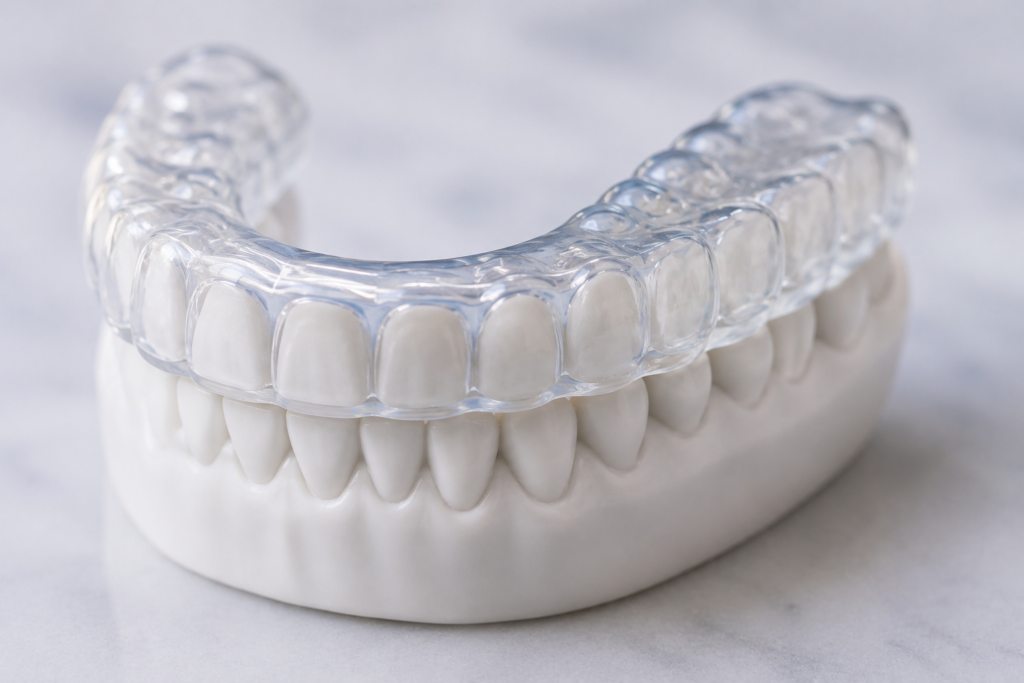
One of the most effective treatments for sleep bruxism is wearing a mouth guard for teeth grinding. A professionally made sleep teeth grinding mouth guard is custom-designed to fit your teeth comfortably while protecting them from excessive grinding forces. Unlike over-the-counter products, custom mouth guards:
- Fit more comfortably
- Offer better protection
- Last longer
- Help reduce jaw strain
- Minimize tooth wear
Although a mouth guard does not stop grinding completely, it significantly reduces damage to your teeth and jaw.
Bruxism Treatment Options
The right bruxism treatment depends on the underlying cause and severity.
Custom Night Guard
A custom-made night guard is usually the first line of treatment for sleep bruxism.
Stress Management
Relaxation techniques, regular exercise, meditation, and improving sleep habits may reduce grinding triggered by stress.
Bite Adjustment
If bite irregularities contribute to the condition, your dentist may recommend corrective treatment.
Restorative Dentistry
For patients with worn or damaged teeth, treatments such as crowns or bonding may restore function and appearance after the grinding habit is managed. Early treatment helps preserve your natural teeth and prevents more complex dental procedures in the future.
Can Bruxism Be Prevented?
Although it cannot always be prevented, you can lower your risk by:
- Managing daily stress
- Avoiding excessive caffeine before bedtime
- Limiting alcohol consumption
- Maintaining good sleep hygiene
- Scheduling regular dental check-ups
- Wearing your prescribed night guard consistently
Regular dental visits allow your dentist to detect early signs before permanent damage occurs.
When Should You Visit a Dentist?
You should schedule a dental consultation if you experience:
- Frequent morning headaches
- Jaw pain that doesn’t improve
- Teeth becoming shorter or flatter
- Increased tooth sensitivity
- Your partner hears grinding noises while you sleep
Prompt treatment helps protect your smile and prevents unnecessary dental complications.
Conclusion
Bruxism is more than just an occasional habit it can silently damage your teeth, jaw, and overall oral health. Whether your grinding is caused by stress, sleep disorders, or bite issues, identifying the reason for teeth grinding is the first step toward lasting relief.
A professionally designed mouth guard for teeth grinding remains one of the safest and most effective ways to protect your teeth while sleeping. Combined with lifestyle changes and personalized dental care, it can significantly reduce the impact of bruxism teeth grinding. If you’re experiencing symptoms of bruxism, the team at Agrawal Dental Clinic can provide a comprehensive evaluation and recommend the most suitable bruxism treatment to keep your smile healthy and pain-free.
FAQs
1. What is the main reason for teeth grinding?
The most common reasons include stress, anxiety, sleep disorders, certain medications, and bite misalignment. A dental examination can help identify the exact cause.
2. Does a mouthguard stop teeth grinding?
A mouthguard for teeth grinding does not stop the habit itself, but it protects your teeth from damage and reduces pressure on the jaw muscles.
3. Is sleep teeth grinding serious?
Yes. If left untreated, sleep bruxism can lead to tooth wear, fractures, jaw pain, headaches, and TMJ disorders.
4. How long should I wear a sleep teeth grinding mouth guard?
Most patients wear their custom sleep teeth grinding mouth guard every night as advised by their dentist to protect their teeth consistently.
5. Can children have bruxism?
Yes. Children may grind their teeth during sleep, but many outgrow the habit. Persistent symptoms should be evaluated by a dentist.